


Busy schedules often make long gym sessions impractical. Fortunately, when your goal is sculpted shoulders, toned arms, and better posture, exercise quality and time under tension matter far more than hours on the gym floor.
Anyone who regularly lifts weights knows that focused intensity delivers results. With this 15-minute arm and shoulder dumbbell workout, you will target your deltoids, biceps, and triceps while activating your upper back and core. By pairing purposeful lifts with short rest intervals, this quick circuit provides exceptional muscle-defining benefits in minimal time.
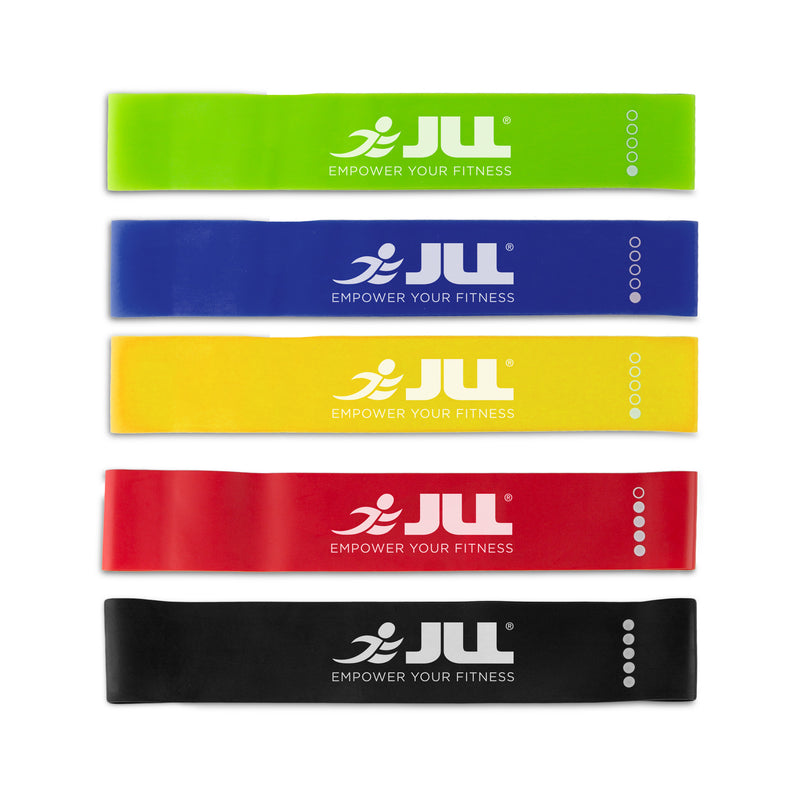
Grab a pair of light-to-medium dumbbells (or a versatile resistance band if you are travelling), lay out your mat, and get started.
- Active Duration: 15 Minutes (3 Rounds)[cite: 22]
- Format: Circuit style (45 seconds work, 15 seconds rest)[cite: 22]
- Equipment: 1–2 pairs of dumbbells (or resistance bands), exercise mat[cite: 22]
- Target Muscles: Deltoids (anterior, lateral, posterior), biceps, triceps, core[cite: 22]
Why a 15-Minute Dumbbell Routine Works
You do not need heavy barbell lifts like the bench press or complex gym machinery to shape your upper body. When deciding between free weights vs machines, dumbbells offer distinct biomechanical advantages:
- Natural Joint Paths: Free weights allow your wrists, elbows, and shoulders to move along individual angles, reducing joint stress to help prevent injury.
- Symmetrical Balance: Independent weights force both sides of your body to work equally, eliminating muscular imbalances. Dumbbells provide versatile strength training that allows your joints to move freely compared to fixed barbells.
- Time-Efficient Hypertrophy: Using brief 15-second rest breaks keeps muscles under sustained metabolic demand, assisting in building strength and definition without requiring an hour-long workout.
- Postural Balance: Strengthening the rear deltoids and rotator cuff stabilisers counteracts the forward-slumped posture caused by sitting at desks.
Quick Warm-Up (2 Minutes)
Prime your shoulders and elbows before lifting:
- Arm Circles: 30 seconds (15s forward, 15s backward) with your arms straight.
- Cross-Body Swings: 30 seconds opening the chest horizontally.
- Overhead Pull-Downs: 30 seconds reaching up and driving elbows down.
- Wrist & Elbow Circles: 30 seconds rolling the joints smoothly.
The 15-Minute Sculpting Circuit (3 Rounds)
Circuit Structure
Perform each movement for 45 seconds, rest for 15 seconds, and transition directly to the next exercise. Repeat for 3 complete rounds.
[45s Work / 15s Rest] × 5 Exercises × 3 Rounds = 15 Minutes
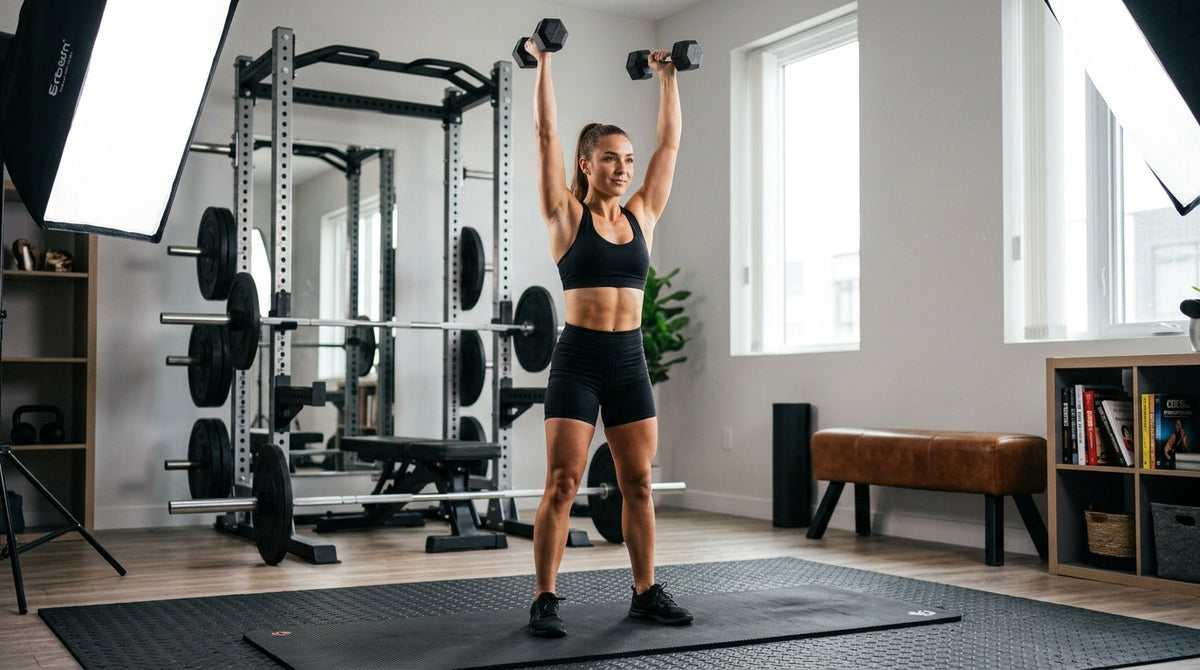
1. Overhead Dumbbell Shoulder Press
Target: Anterior & Lateral Deltoids, Triceps
One of the most effective compound shoulder exercises for capping the shoulders and improving overhead stability.
How to do it:
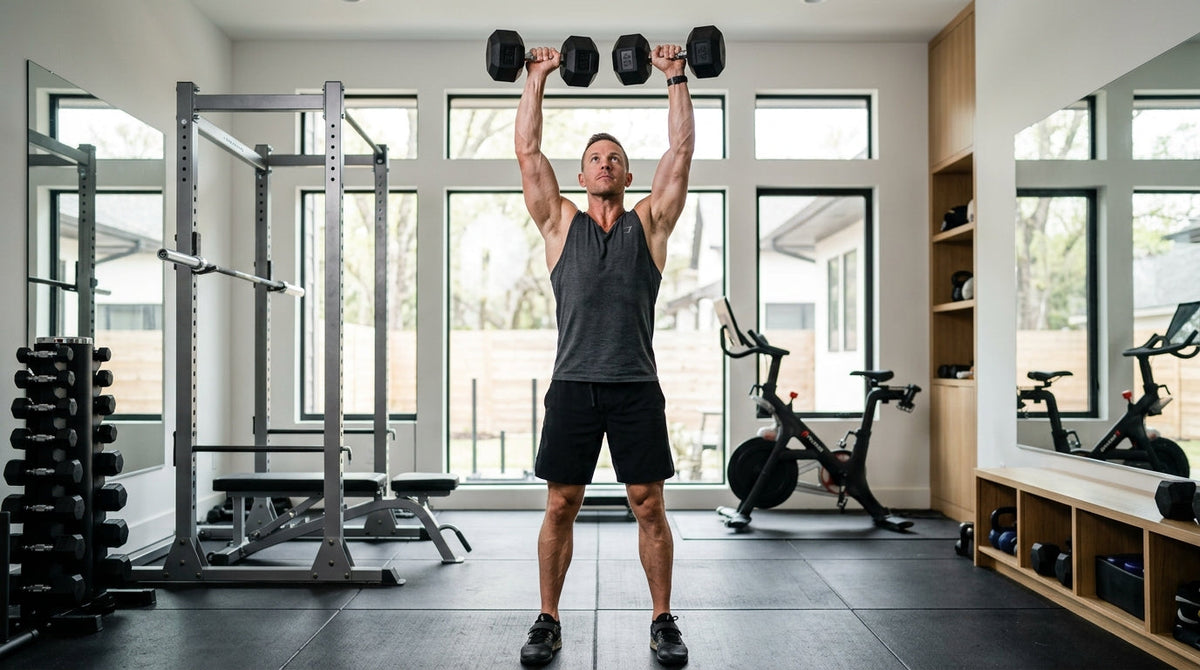
Stand with your feet shoulder width apart. Bring the dumbbells to shoulder height with elbows bent at roughly 90 degrees. Press the weights straight overhead in a smooth arc without arching your lower back. Lower with control to ear level and repeat.

2. Alternating Bicep Hammer Curls
Target: Biceps Brachii, Brachialis, Forearms
Hammer curls work the deeper arm muscles to create upper-arm thickness while strengthening grip. If you want to isolate your arms further, explore our guide on the best dumbbell exercises for bigger biceps.
How to do it:
Stand tall with feet shoulder width apart, holding dumbbells at your sides with palms facing inward. Keeping your elbows pinned against your ribs, curl the right dumbbell up toward your shoulder. Lower slowly, then repeat on the left side, alternating with a steady tempo.

3. Standing Lateral Raises
Target: Lateral (Side) Deltoids
Isolating the side deltoid creates shoulder width, accentuating a lean upper-body taper.
How to do it:
Stand tall with a soft bend in your knees. Hold light dumbbells in front of your thighs. Keeping your arms straight with just a subtle bend at the elbows, lift the weights out to your sides until parallel to the floor. Pause briefly, then lower slowly against gravity.

4. Overhead Tricep Extension
Target: Triceps (Long Head)
This movement stretches and isolates the largest head of the triceps to tone the back of the arms.
How to do it:
Stand or sit upright. Hold a single dumbbell vertically overhead using both hands. Keep your elbows pointed forward and close to your ears. Lower the weight behind your head until your elbows bend to 90 degrees, then extend your arms back to the top, squeezing your triceps firmly.

5. Bent-Over Rear Delt Flyes
Target: Posterior Deltoids, Rhomboids, Upper Back
Targeting the back of the shoulder balances out anterior pressing and pulls rounded shoulders back into alignment.
How to do it:
Hinge at your hips with a flat back and soft knees, setting your feet shoulder width apart. Let the dumbbells hang down with palms facing each other. Squeeze your shoulder blades together to lift your arms out to the sides through a wide range of motion. Lower with control.

4 Keys for Best Results
Select Smart Weights
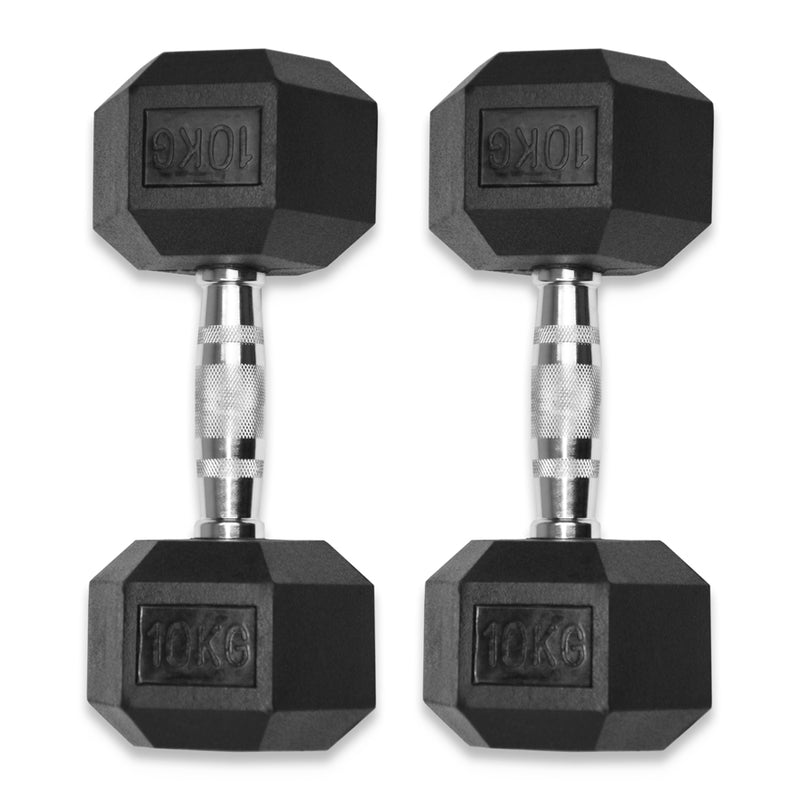
Use lighter weights (2–4 kg) for lateral raises and rear flyes, and moderate weights (5–10 kg) for presses and curls. Opting for a set of rubber hex dumbbells provides anti-roll stability and durable grip when shifting between rapid intervals.
Control the Descent
Lower each rep across 2 to 3 seconds. Resisting gravity creates the micro-tears necessary for muscle tone.
Apply Progressive Overload
As your fitness improves, gradually increase the dumbbell weight or slow down your repetition tempo. Pairing this with other dumbbell exercises for building muscle will help you progress steadily over time.
Prioritise Form
Never swing your hips to create momentum; strict form keeps tension purely on the target muscles.
Frequently Asked Questions
Can I do this routine using a resistance band?
Yes. A light-to-medium resistance band works well for this entire circuit. Step on the middle of the band to execute lateral raises, hammer curls, overhead presses, and rear flyes while maintaining continuous tension throughout every rep. You can also mix in these 10-minute home resistance band exercises on days when you don't have free weights handy.
How often should I do this workout?
Perform this routine 2 to 3 times per week on non-consecutive days. Allowing 48 hours of recovery between upper-body sessions gives muscle tissue ample time to repair and adapt. If you are structuring a weekly split, check out our guide on which muscle groups to train together for maximum efficiency.
What size dumbbells should beginners choose?
Beginners should start with 1.5 kg to 3 kg for lateral raises and rear flyes, and 3 kg to 5 kg for presses and curls. Starting light ensures you master the movement patterns and help prevent injury.





Leave a comment
All comments are moderated before being published.
This site is protected by hCaptcha and the hCaptcha Privacy Policy and Terms of Service apply.