



Whether you are looking to build explosive lower body power, break through a stubborn squat plateau, or safeguard your lower back, the box squat is one of the premier compound exercises in modern strength and conditioning.
Popularised by legendary powerlifting institutions like Westside Barbell and trusted by coaches worldwide, box squats take the classic back squat and introduce a deliberate, controlled pause at a fixed height. This simple modification shifts the mechanical emphasis onto your posterior chain—specifically your glutes and hamstrings—while eliminating momentum and ingraining safe, repeatable movement patterns.
Below is your complete guide on how to do box squats with proper form, the unique benefits they offer compared to regular free squats, common mistakes to avoid, and the best variations to try.

What Is a Box Squat?
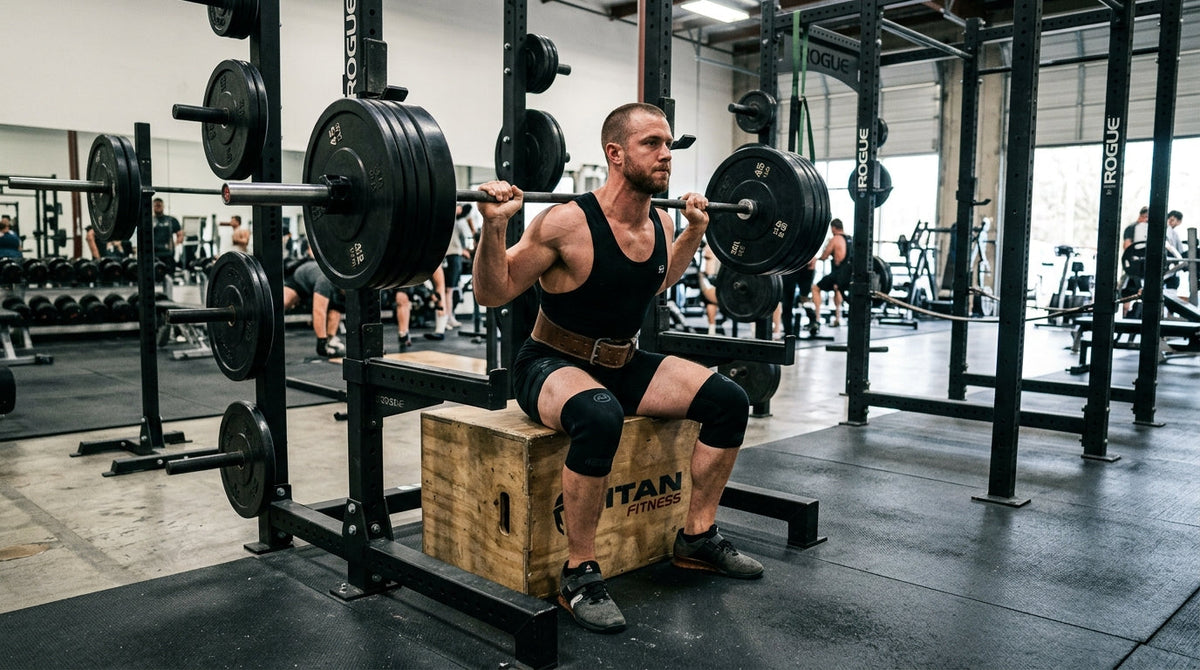
A box squat is a compound lower-body movement where you descend until your hips make brief, controlled contact with a sturdy plyometric box, bench, or step before driving forcefully back up to the start position.
Unlike a standard barbell back squat, where you immediately reverse direction at the bottom using the elastic stretch reflex of your tendons, the box forces you to come to a momentary stop. This pause breaks the eccentric-concentric chain. As a result, each working muscle contracts from a static pause, forcing your hips to generate pure, unassisted starting strength out of the hole without relying on passive bounce.
If you are setting up your workout station at home or deciding on equipment, pairing this movement with a solid rack setup makes a huge difference—learn more in our guide on Do I Really Need a Squat Rack?.
Regular Squats vs. Box Squats: What Is the Difference?
While both exercises recruit the quadriceps muscles and core, they place fundamentally different demands on your joints:
| Feature | Regular Free Squat | Box Squat |
|---|---|---|
| Primary Muscle Focus | Balanced quadriceps and posterior chain | Gluteus maximus, hamstrings, and hip adductors |
| Momentum & Rebound | Utilises the natural stretch reflex (rebound) | Eliminates rebound; requires pure static-to-dynamic power |
| Depth Consistency | Variable (often changes as fatigue sets in) | Completely standardised by the box height |
| Joint Shear Force | Higher forward knee travel and patellar shear | More vertical shins, protecting the knee joint |
| Spinal Loading | Continuous spinal tension throughout the cycle | Controlled pause allows hip reset and posture check |
5 Major Benefits of Box Squats
1. Eliminates Momentum to Build Explosive Starting Strength
During a standard squat, descending quickly stores elastic energy in your connective tissues, which assists in rebounding out of the hole. A box squat deliberately cancels this reflex. Sitting back onto the box forces the gluteus maximus, hamstrings, and spinal erectors to fire from a dead stop, producing high muscle activation that directly translates into heavier deadlifts and faster sprint speed.
2. Protects Sensitive Knees and Reduces Joint Shear
Many lifters experience discomfort around the patella when deep squats push their knees far forward past their toes. By initiating the descent through the hip joint rather than merely bending your knees, the box squat keeps your shins substantially more vertical. This reduces acute knee flexion angles under heavy loads, sparing the knee joint and dramatically lowering your overall risk of injury.
3. Enforces Consistent, Standardised Depth
One of the most common issues when building muscle through squatting is cutting depth as the barbell gets heavier. Using a target box provides an objective, tactile reference point on every single repetition. Once your hips meet the surface, you know you have hit the target depth without second-guessing your range of motion.
4. Teaches Proper Hip Hinge Mechanics
Beginners often turn squats into an exaggerated knee bend instead of hinging backwards. The physical presence of a box behind you removes the fear of toppling over, teaching you how to sit back, open up the hip flexors, and load the posterior chain safely. If you are new to barbell training, check out The Ultimate Guide to Weightlifting for Beginners for foundational lifting cues.
5. Supports Sustainable, Long Term Lifting
Because the box disperses kinetic energy at the bottom of the rep without relaxing your abdominal brace, box squats reduce cumulative spinal and knee wear. This makes them an invaluable staple for lifters managing high training volume or building athletic longevity over the long term.
How to Do a Box Squat with Proper Form (Step-by-Step)
Setup & Equipment
- Set Box Height: Position a firm plyo box or flat weight bench inside your squat rack. For most lifters, parallel depth (hips level with your knees when seated) is the ideal starting height.
- Barbell Placement: Set the barbell on the J-hooks around mid-chest height. Step under the bar, rest it across your upper back (high bar) or rear delts (low bar), and unrack the weight with a tight core.
- Stance: Take two small steps back until your calves are roughly 5 to 10 cm in front of the box. Set your feet slightly wider than shoulder-width, with your toes angled outwards 15 to 30 degrees.
Execution
- Brace Your Core at the Start Position: In your standing start position, take a deep diaphragmatic breath into your abdomen and brace your core as if preparing for an impact. Keep your chest proud and your spine neutral.
- Break at the Hips First: Begin the descent by hinging back through the hip joint rather than just bending your knees. Drive your knees out in line with your toes as your hips travel backward.
- Control the Descent: Lower yourself smoothly over 2 to 3 seconds until you settle into the bottom squat position. Maintain tension through your torso and legs the entire way down.
- Make Soft Contact with the Box: Gently sit your hips onto the box. Do not relax, slump, or bounce. Keep your abdominal wall braced, your quadriceps muscles engaged, and your shins perpendicular to the floor. Pause on the box for 1 to 2 seconds.
- Drive Up Explosively: As each leg muscle contracts to break static contact, drive hard through your mid-foot and heels. Squeeze your glutes and hamstrings forcefully to return to the upright start position, exhaling at the top.

4 Common Box Squat Mistakes to Avoid
- Bouncing Off the Box: Slamming down and treating the box like a trampoline defeats the purpose of the pause and spikes your risk of injury from spinal compression. Touch down lightly with complete muscular control.
- Rocking Backward and Forward: When seated on the box, many lifters lean backward and whip their torso forward to create momentum. Maintain a stable torso angle so your hips and shoulders rise together.
- Relaxing the Core at the Bottom: Slumping down onto the box disengages your midsection and shifts heavy spinal loads onto passive structures. Stay rigid from the first repetition to the last.
- Letting the Knees Cave In (Valgus Collapse): Keep active outward tension by spreading the floor with your feet, ensuring your knees never collapse inwards during deep knee flexion.

Box Squat Variations
Depending on your experience, goals, and equipment, you can adjust the exercise to suit your routine:
- Bodyweight Box Squats: Perfect for true beginners or warm-ups. Using only your body weight allows you to groove foundational movement patterns and build balance before loading a barbell.
- Dumbbell / Kettlebell Goblet Squats onto a Box: Performing goblet squats with a free weight held against your chest serves as a natural counterbalance. This keeps your torso upright and ensures optimal muscle activation in the core and quads. Pair this with our tips in Dumbbells: Your Key to Versatile Strength Training.

- Low-Box Squats: Placing the box 5 to 8 cm below parallel demands greater mobility through the hip flexors and strengthens out-of-the-hole drive for advanced powerlifters.
- Accommodating Resistance (Bands or Chains): Attaching resistance bands overloads the top half of the lift, forcing your hip extensors and gluteus maximus to accelerate throughout the entire range of motion.

Frequently Asked Questions
Are box squats safer for your knees than regular squats?
Yes. Because box squats emphasize an aggressive hip hinge and keep the shins vertical, they restrict forward knee travel. This limits stress on the patellar tendon and knee joint, significantly lowering the risk of injury for lifters with past knee irritation.
Can box squats help with building muscle?
Absolutely. While box squats are renowned for developing explosive power, they are equally potent for building muscle. Eliminating momentum forces your gluteus maximus, hamstrings, and quadriceps to recruit high-threshold motor units to move the load from a dead stop.
What height should the box be?
A standard box height places your hip crease parallel with the top of your knees when seated in the squat position (typically 30 cm to 45 cm depending on your height). If you lack hip mobility, start slightly above parallel and gradually lower the box over time.
Can I use a weight bench instead of a plyo box?
Yes. A standard flat gym weight bench is usually 42 to 45 cm high, which matches parallel depth for most lifters. If the bench is slightly too low, you can stack weight plates or a firm foam pad on top to adjust the height.
How many reps and sets should I perform?
For building explosive power and pure strength, perform 3 to 5 sets of 3 to 5 reps with heavier weights and complete rest between sets. For hypertrophy, perform 3 to 4 sets of 8 to 12 reps with moderate loads.
Recommended Home Strength Gear for Box Squats

B200 Adjustable Weight Bench
Sturdy multi-angle bench ideal for standardised parallel box squats and press routines.
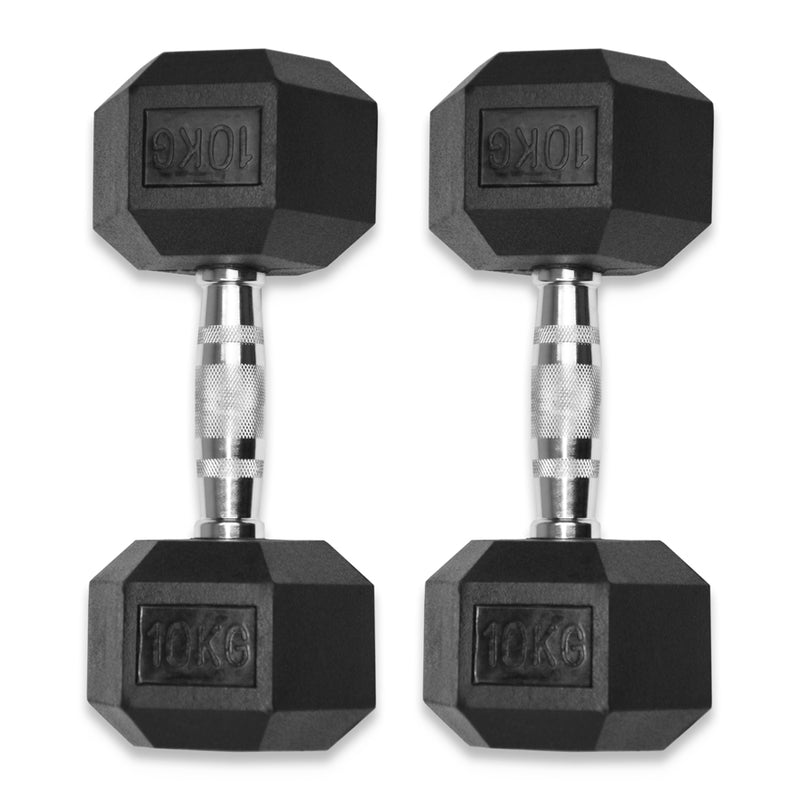
Rubber Hex Dumbbells
Anti-roll hex design perfect for goblet squats and loaded box squat variations.

Cast Iron Kettlebell
Solid cast iron weight for counterbalance squats, core activation, and posterior chain work.




Leave a comment
All comments are moderated before being published.
This site is protected by hCaptcha and the hCaptcha Privacy Policy and Terms of Service apply.