


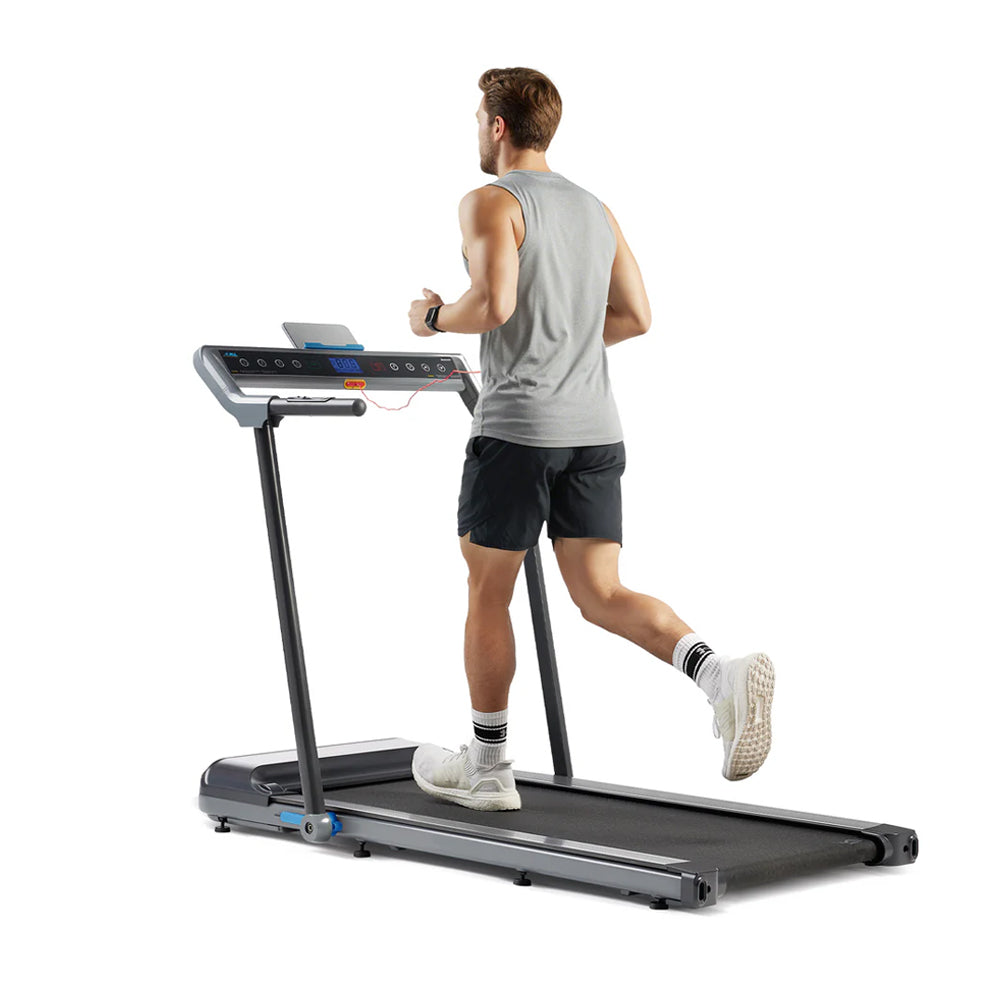

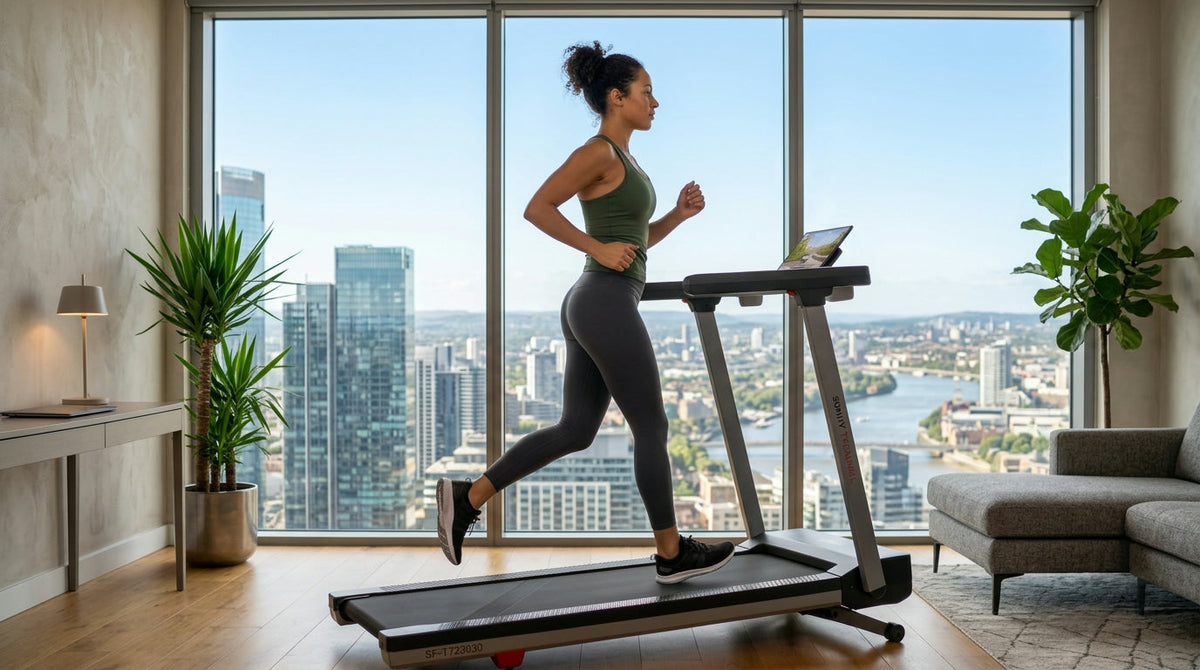
Walking is one of the most effective forms of cardiovascular exercise. If you want to increase calorie burn without the heavy joint impact of outdoor running, incline walking is the ideal solution.
Elevating the gradient on an incline treadmill (or outdoor hill route) forces your lower body muscles to work harder against gravity. This provides the metabolic conditioning and health benefits of intense exercise while maintaining the low-impact safety of walking.
It doesn't matter if your goal is reducing body fat, achieving sustainable fat loss, improving aerobic fitness, or tailoring a routine to your current fitness level, this guide covers the core benefits, proper form cues, and structured ways to progress your workouts.
What Is Incline Walking?
Incline walking means walking uphill rather than on a flat surface (0% incline).
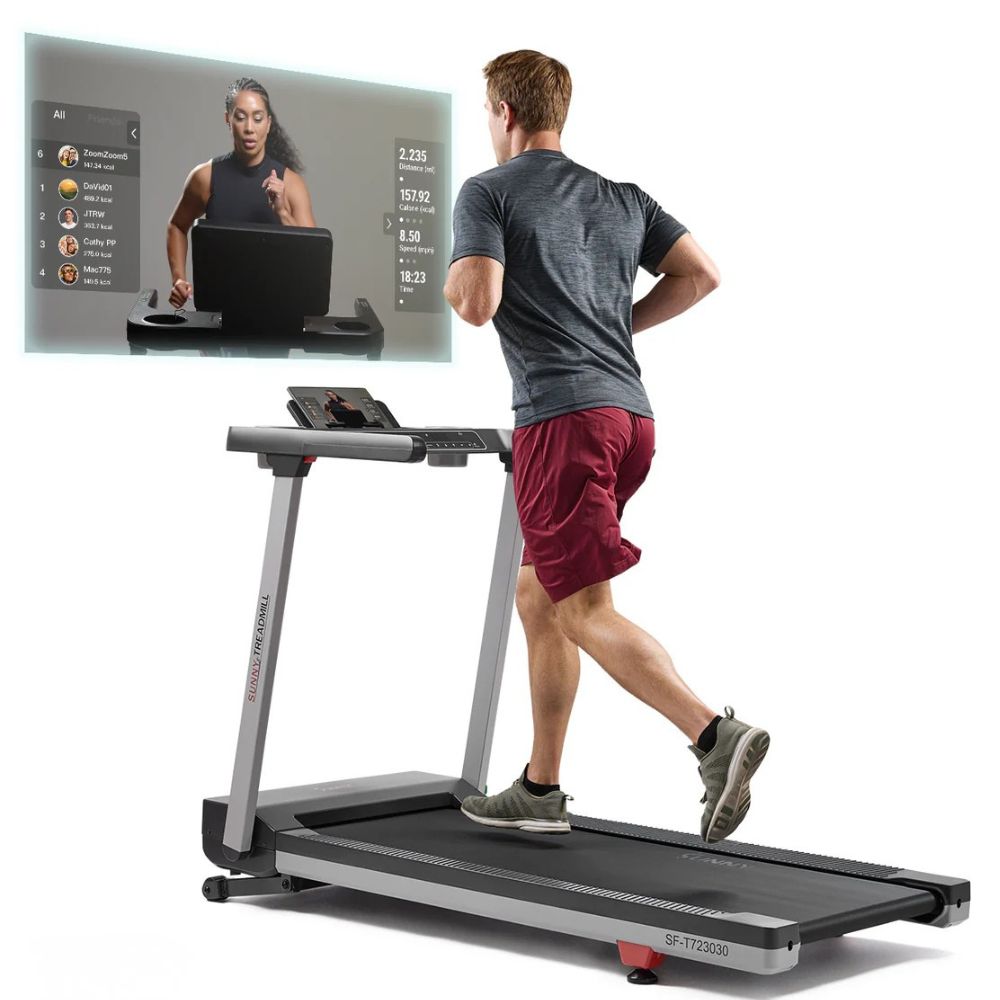
On a modern motorised treadmill, this gradient is measured in percentage points. Setting the deck to a 1% grade mimics outdoor air resistance. Pushing past 4% transforms brisk walking into a demanding, full-body cardio workout that builds your aerobic base.
Because working muscles demand larger amounts of oxygen, uphill walking bridges the gap between gentle aerobic exercises and high-demand endurance training. A home setup makes sticking to this habit simple; explore the reasons to own a folding home treadmill for space-saving options.
Flat Walking vs Incline Walking vs Running
To understand why gradient training delivers such impressive results, consider this direct comparison:
| Feature | Flat Walking (0%) | Incline Walking (8–12%) | Flat Running |
|---|---|---|---|
| Calorie Expenditure | Moderate (200–250 kcal/hr) | High (450–600 kcal/hr) | High (500–700 kcal/hr) |
| Joint Impact & Shear | Minimal (1–1.5× body weight) | Low (soft mid-foot plant) | High (2.5–3× body weight) |
| Primary Muscle Recruitment | Quads, shins, hip flexors | Glutes, hamstrings, calves, core | Quads, calves, hip flexors |
| Fat Oxidation Zone | Low to moderate (Zone 1) | Optimal Aerobic (Zone 2–3) | Cardio / Anaerobic (Zone 3–4) |
| Overuse Injury Risk | Very Low | Low (spares patellar tendon) | Moderate to High (shin splints, knees) |
5 Major Benefits of Incline Walking
1. Burns More Calories and Optimises Fat Loss
Walking at 3.0 to 3.5 mph on a 9% to 12% incline burns roughly the same calories as flat jogging at 6.0 mph. Increasing your pulse into an aerobic heart rate zone (65% to 75% of your maximum heart rate) puts you directly in the target aerobic zone for peak fat oxidation. This metabolic demand helps accelerate fat loss and strip stubborn body fat while protecting lean muscle mass. Learn more in our complete guide on how to lose weight on a treadmill.
2. Sparing on Joints and Minimises Overuse Injury
Running produces severe ground reaction forces up to three times your body weight with every hard heel strike. Over time, these repetitive impacts irritate patellar tendons and elevate your risk of an overuse injury. Incline walking keeps one foot grounded at all times. The uphill slope promotes a soft mid-foot plant rather than an abrasive heel strike, dramatically reducing joint shear while controlling acute knee flexion angles.
3. Strengthens Heart Health and Lowers Blood Pressure
Climbing challenges your cardiovascular network to dilate elastic blood vessels and deliver oxygen under load, strengthening your heart muscle and reducing resting blood pressure. This efficient cardiovascular conditioning is why endurance athletes use uphill walking to build high-volume cardiovascular endurance without central nervous system burnout.
4. Recruits the Posterior Chain and Enhances Mobility
Flat walking relies mainly on the quads and shins. Elevation shifts the mechanical load into the posterior chain:
- Gluteus Maximus: Drives hip extension to push you up the slope.
- Hamstrings: Dynamic control of knee flexion to pull your body over the lead foot.
- Calves & Ankles: Experience a deep dorsiflexion stretch with every step, providing functional mobility work that frees tight Achilles tendons.
5. Improves Aerobic Fitness and VO2 Max
Climbing requires your heart and lungs to move significant amounts of oxygen to large muscle groups. Regular incline training increases stroke volume, elevates your VO2 max, lowers resting heart rate, and elevates overall aerobic fitness.

How to Walk on an Incline with Proper Form
- Hinge from the Ankles: Maintain an upright chest and engaged core with a slight forward lean originating from your ankles—never bend forward at the waist.
- Let Go of the Handrails: Gripping the rails tilts your body backward and cancels out the incline angle, reducing calorie burn by up to 25%. If you must hold on, reduce your speed or grade.
- Drive Your Arms: Bend your elbows at 90 degrees and pump your arms rhythmically to boost energy expenditure and assist balance.
- Mid-Foot Strike: Land softly through your mid-foot and push forcefully through your heel, big toe, and glute.


Common Mistakes to Avoid
- Leaning Back on Handrails: Removes workload from your legs and strains wrists and shoulders.
- Overstriding: Taking steps that are too long acts as a brake on momentum. Use shorter, quicker strides instead.
- Starting Too Steep: Avoid jumping straight to 15% incline. It is best to gradually increase the gradient to protect your Achilles tendons and patellar tendons.
- Looking Down: Staring at your feet strains your neck and rounds your upper back. Keep your eyes forward.
To build safe habits and avoid common treadmill pitfalls—like holding the console rails or improper striding—review our essential treadmill do’s and don’ts.
Incline Walking Progressions
Routine 1Beginner Incline Builder (20 Minutes)
- Warm-Up: 3 minutes of flat brisk walking (2.5–2.8 mph, 0%) to warm up your aerobic base.
- Intervals (Repeat 4 times): 2 minutes at 3% incline, then 2 minutes at 5% incline (2.8 mph).
- Cool-Down: 3 minutes flat (2.5 mph, 0%).
"12-3-30" Steady-State (30 Minutes)
- Warm-Up: 5 minutes building from 0% to 6% incline (3.0 mph).
- Working Block: 20 to 25 minutes at 10%–12% incline at 3.0 mph on your motorised treadmill without holding the rails.
- Cool-Down: 3 minutes flat (2.0 mph).
High Intensity Intervals (20 Minutes)
- Warm-Up: 3 minutes flat walking (2.8 mph).
- Intervals (Repeat 6 times): 1 minute steep climbing at 10%–12% incline (3.5 mph), followed by 1.5 minutes recovery at 2% incline (2.5 mph). Real-time heart rate monitoring is ideal here to track your recovery between these high intensity intervals.
- Cool-Down: 2 minutes flat.
While treadmill handlebar sensors provide a quick estimate, explore heart rate monitor accuracy and whether you can trust your cardio machine before basing your interval targets on built-in grips alone.
How to Progress Over Time
When a workout begins to feel easy, progress gradually:
- Increase Gradient First: Raise the incline by 1% to 2% while keeping your speed steady.
- Extend Duration: Add 5 minutes to your main climbing block until you reach 40 to 45 minutes of sustained cardiovascular conditioning.
- Adjust Frequency: Monitor the number of times you train each week, building from 2 to 4 sessions to build cardiovascular endurance.
Frequently Asked Questions
Is incline walking better than running for fat loss and body fat reduction?
Yes, for many lifters. It matches running's calorie burn with virtually zero joint impact, making it easier to perform consistently to shed body fat and achieve sustainable fat loss. If your primary goal is targeting visceral fat, compare how incline walking stacks up against rowers and bikes in our research-backed guide on which cardio machine helps lose belly fat
What is the ideal target heart rate zone?
For general health benefits, aim for an aerobic heart rate zone between 60% and 75% of your maximum heart rate. Wearable heart rate monitoring helps you train in the exact aerobic zone matching your personal fitness level.
How often should I do an incline cardio workout?
Completing an incline cardio workout 3 to 4 times per week delivers great results. Begin with 2 sessions and gradually increase the number of times you train each week.
Recommended Incline Treadmills & Training Gear
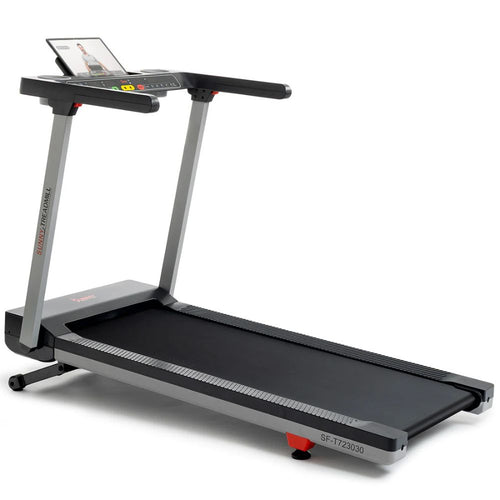
Auto Incline Smart Treadmill
15 auto-incline levels, extra-wide 51cm cushioned running deck, and Bluetooth app connectivity.

Slim Interactive Auto Incline Smart Foldable Treadmill
Ultra-compact folding design with incline settings and smart app integration for small spaces.
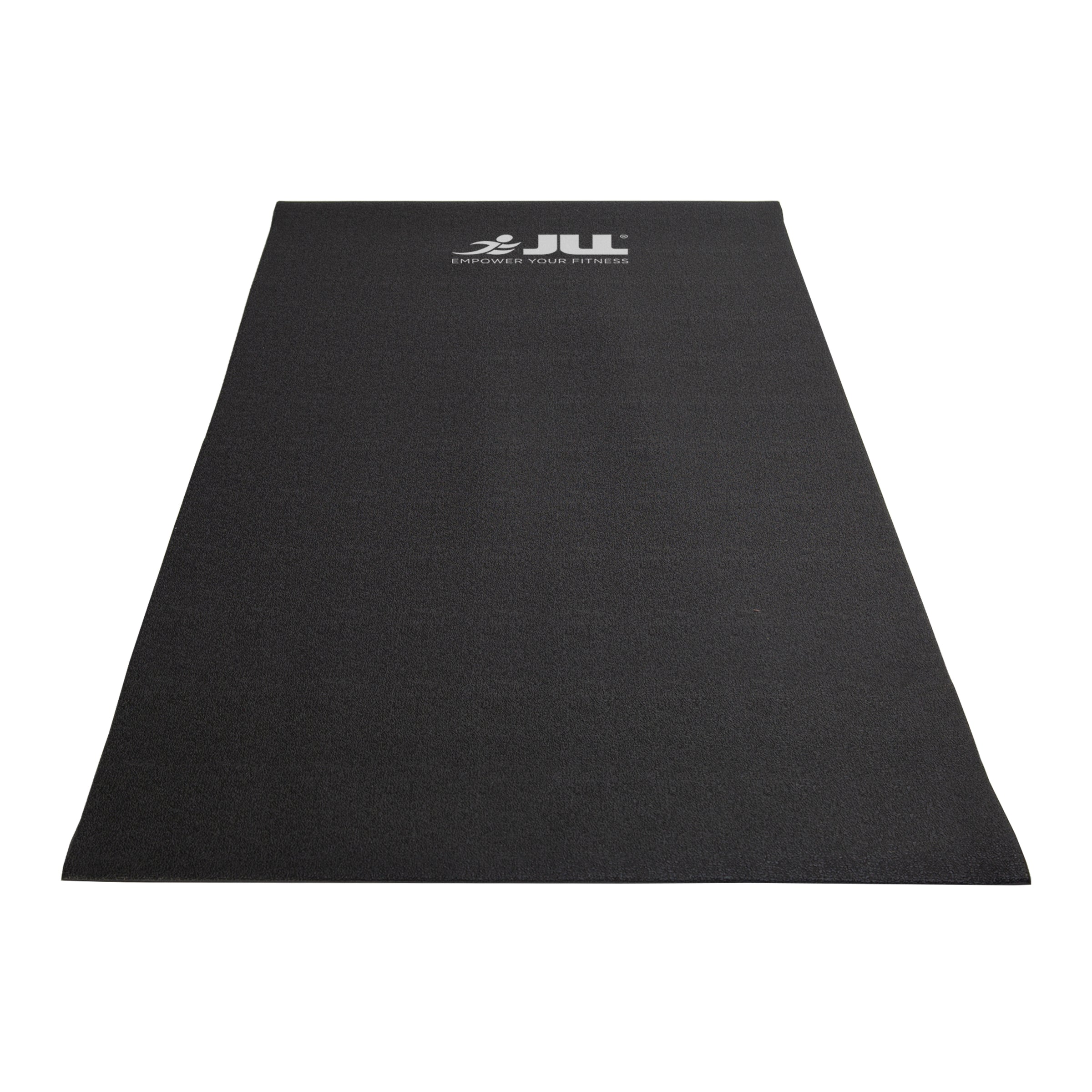
Cardio Machine Mat
High-density protective floor mat that absorbs impact vibrations and prevents slipping.




Leave a comment
All comments are moderated before being published.
This site is protected by hCaptcha and the hCaptcha Privacy Policy and Terms of Service apply.