











Hyrox has quickly taken over the fitness world as the global standard for functional fitness racing. Combining 8 kilometres of running interspersed with 8 distinct functional workout stations, it tests your aerobic capacity, muscular endurance, and mental toughness.
Whether you’re stepping up to the starting line in the Open, Pro, or tackling the event with a partner using our guide to competing in Hyrox Doubles, preparing for a hyrox race requires a deliberate strategy. You can't just run long distances or only lift heavy weights—you must train your body to handle compromised running (running at high intensities while carrying fatigue from heavy lifts and station work).
Below is a complete, practical guide covering the official race stations, the equipment you need, and a high-yield weekly training plan.
The 8 Hyrox Stations & Required Training Equipment
Every Hyrox event follows the exact same sequence worldwide: 1km run → Station → 1km run → Station for 8 total rounds. Knowing what each station demands—and the equipment needed to simulate it—is the key to pacing yourself on race day.
| Station # | Exercise | Distance / Reps | Primary Muscle Groups | Essential Gear Needed |
|---|---|---|---|---|
| 1 | SkiErg | 1,000 m | Lats, core, triceps, hips | Concept2 SkiErg |
| 2 | Sled Push | 50 m | Quads, glutes, calves, core | Heavy-duty push sled + turf lane |
| 3 | Sled Pull | 50 m | Upper back, biceps, hamstrings, grip | Sled + thick pull rope attachment |
| 4 | Burpee Broad Jumps | 80 m | Full body, explosiveness, lungs | Padded surface / rubber flooring |
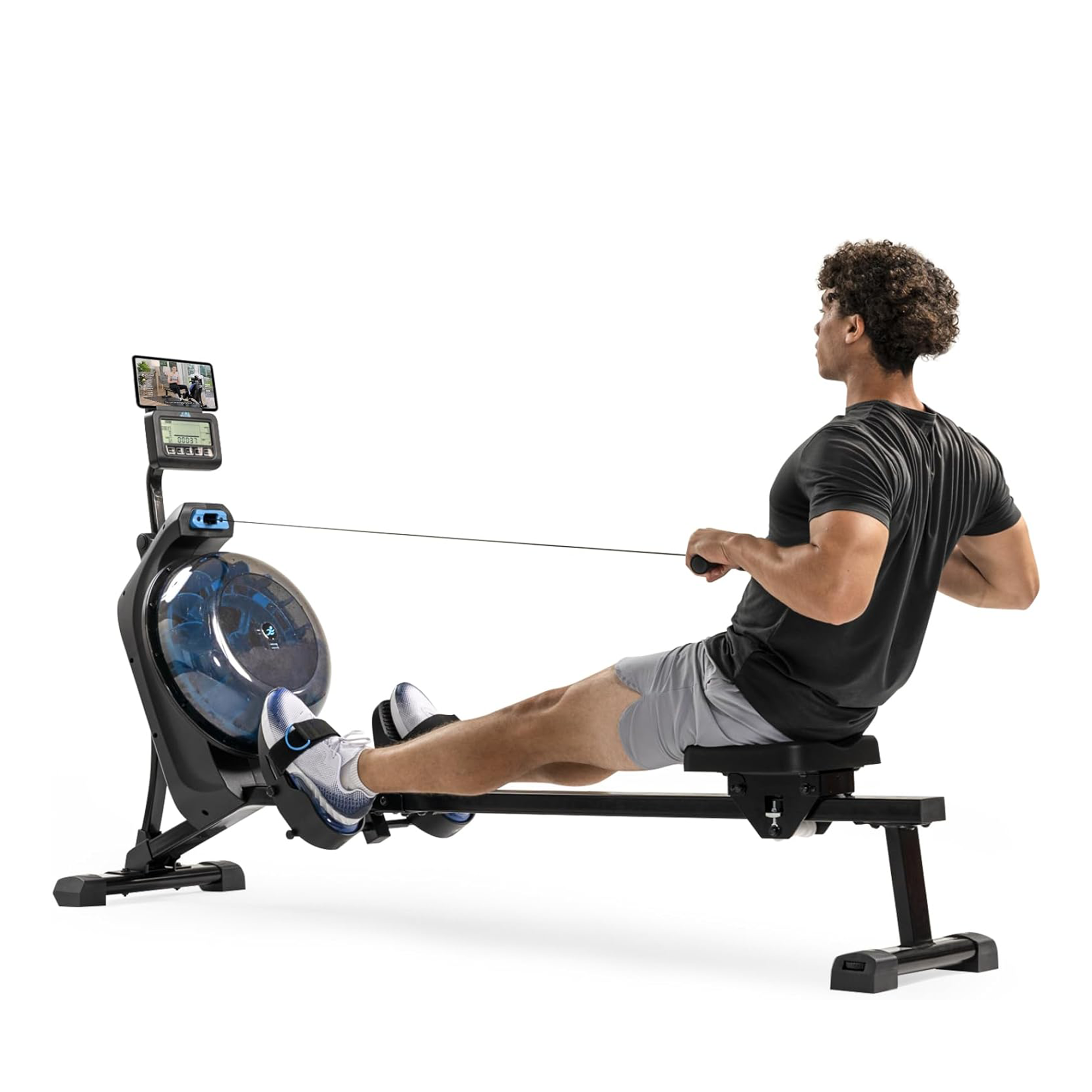
| 5 | Rowing | 1,000 m | Quads, hamstrings, back, arms | Concept2 Rowing Machine (RowErg) |
| 6 | Farmer's Carry | 200 m | Forearms/grip, traps, core stability | Kettlebells (2×16 kg to 2×32 kg) |
| 7 | Sandbag Lunges | 100 m | Quads, glutes, core, shoulders | Weighted sandbag (10 kg–30 kg) |
| 8 | Wall Balls | 100 reps | Quads, glutes, shoulders, triceps | Target wall (9–10 ft) + Soft medicine ball |

The 4 Pillars of Hyrox Preparation
To optimise your finish time, elevate your baseline fitness level, and avoid hitting a wall midway through the race, structure your programme around these four physiological pillars:
- Aerobic Engine & VO2 Max: Running accounts for over 50% of your overall race time. Focused endurance training increases your VO2 max and builds a robust Zone 2 aerobic base. Always verify your exertion levels accurately by checking your heart rate monitor accuracy on cardio equipment during threshold runs.
- Compromised Running Workouts: Practicing a 1km run immediately following heavy leg fatigue (e.g., right after 50 m sled pushes or 100 m lunges) conditions your nervous system to adjust your running stride when your legs feel like lead.
- Leg-Drive & Posterior Chain Strength: Heavy sled pushes, sled pulls, and wall balls require strong quadriceps, glutes, and spinal erectors. Selecting the right weights for strength training ensures you build a reliable strength buffer for race-day loads. Incorporating targeted accessory moves—like using hex dumbbells for home strength work during farmer's carries, squat variations, deadlifts, and Romanian deadlifts (RDLs)—delivers a true full-body workout that prevents premature forearm failure.
- Grip Endurance & Core Bracing: Holding heavy kettlebells for 200 m and carrying sandbags while lunging taxes your grip and midsection. Dead hangs, heavy farmer's walks, and suitcase carries deliver a true full body workout that prevents premature forearm failure.

Actionable 4-Day Weekly Hyrox Workout Routine
This structured weekly plan balances running volume, station skill work, and strength development. It fits seamlessly into progressive training programs designed to elevate both beginner competitors and seasoned elite athletes.
- Warm-up: 10 min light jog + dynamic stretching.
-
Erg Intervals:
- 4×750 m SkiErg at target race pace (90 sec rest between sets).
- 4×750 m on the rowing machine at target race pace (90 sec rest between sets).
- Base Run: 30–45 min steady-state Zone 2 run (conversational pace).
-
Strength Block:
- Barbell Back Squats: 4×6–8 reps
- Romanian Deadlifts: 3×8–10 reps
- Bulgarian Split Squats: 3×10 reps per leg
-
Station Conditioning (3 Rounds):
- 25 m Heavy Sled Push
- 25 m Heavy Sled Pull
- 50 m Sandbag Walking Lunges
- Rest 2 min between rounds.
Prioritise low-impact movement during active recovery days (e.g., a 30 min easy swim, casual mobility routine, or light walk) to boost overall recovery.
-
Circuit (4 Rounds for Time):
- 1km Run at target race pace
- 20 m Burpee Broad Jumps
- 500 m Row or SkiErg
- 50 m Farmer's Carry (Race weight kettlebells)
- 25 reps Wall Balls (14 lb women / 20 lb men)
- Rest 3 min between rounds.
-
Strength & Grip Block:
- Weighted Pull-ups or Lat Pulldowns: 4×8 reps
- Dumbbell / Barbell Rows: 3×10 reps
- Farmer’s Hold (Heavy Kettlebells): 3×max duration
- Hanging Knee Raises / Planks: 3×45 sec
Tapering, Lactate Threshold, & Long-Term Progression
Becoming a well-rounded endurance athlete capable of tackling a Hyrox event requires gradually increasing your training volume over an 8- to 12-week block. Progression should be systematic: build your weekly running mileage by no more than 10% per week, while steadily scaling station weights toward competition standards.

Pushing Your Lactate Threshold
A primary goal of Hyrox-specific endurance training is raising your lactate threshold—the point at which lactic acid accumulates in the bloodstream faster than your body can clear it. During a race, dipping over this threshold during a heavy 50 m Sled Push makes the subsequent 1km run feel twice as gruelling. Incorporating tempo runs and interval stations right at your threshold pace teaches your body to buffer fatigue under heavy physiological stress.
Race-Week Taper & Overall Health
In the final 10–14 days leading up to race day, shift your focus toward preserving your overall health and nervous system capacity:
- Reduce Volume, Keep Intensity: Cut overall workout volume by 30–40%, but maintain short bursts at target race pace to keep your muscle firing patterns sharp.
- Prioritise Recovery: Emphasise quality sleep, proper hydration, and read up on what to eat before high-intensity workouts for maximum results during the final 48-hour carbohydrate-loading window.
- Protect the Joints: Swap out heavy maximum-effort strength sessions for mobility drills and light movement. Entering the arena fully restored ensures you can push your physical limits from the first stroke on the SkiErg to the final Wall Ball.
Recommended Gear & Footwear for Hyrox
Having the right gear prevents blisters, improves traction on the carpet/turf, and ensures reliable pacing data:
- Hybrid Race Shoes: Look for a shoe with strong grip for the sled push on turf, coupled with enough cushioning for 8 km of concrete/indoor running (e.g., PUMA Deviate NITRO, Saucony Endorphin Speed). Pure road-racing carbon shoes can sometimes lack lateral stability during sled pushes.
- GPS & Heart Rate Tracker: A reliable fitness watch (like a Garmin Forerunner) paired with a chest strap ensures accurate heart rate zone tracking and precise 1km run split timing during race simulations.
- Performance Apparel: Fitted moisture-wicking synthetic shirts and anti-chafing shorts or compression tights. Avoid loose tops that might catch on erg handles during the sled pull.

Frequently Asked Questions (FAQ)
1. How long does it take to complete a Hyrox race?
The average completion time across all divisions is around 1 hour and 32 minutes. Elite athletes often finish in under 60 minutes, while beginners or those in the Open division typically complete the race between 1 hour 15 minutes and 2 hours. There are no maximum time limits, making the event achievable for all fitness levels.
2. Is Hyrox suitable for beginners?
Yes. Hyrox is specifically structured to be accessible to everyday gym-goers as well as elite athletes. Beginners can enter the Open division (which uses lighter weights) or participate in Doubles or Relay teams, where station workloads are split between partners.
3. How many weeks should I train for a Hyrox event?
A standard Hyrox preparation program lasts 8 to 12 weeks. This gives you enough time to gradually build an aerobic running engine, improve grip strength, and practise compromised running workouts without risking overuse injuries.
4. What is the difference between Hyrox and CrossFit?
While both test functional strength, Hyrox is a standardized endurance race—every Hyrox event worldwide uses the exact same order of exercises and distances (8x1km runs + 8 stations). If you are deciding which event style fits your fitness goals, check out our full breakdown of Hyrox vs CrossFit. CrossFit workouts change daily and often involve complex gymnastics, whereas Hyrox uses accessible functional movements.
5. What are the most common mistakes first-timers make?
The single biggest mistake is going out too fast on the first 1km run and burning through energy stores before the heavy sled stations. Other common errors include neglecting compromise running in training, miscounting running laps inside the arena, and underestimating the physical demand of the wall balls at the finish line.






Leave a comment
All comments are moderated before being published.
This site is protected by hCaptcha and the hCaptcha Privacy Policy and Terms of Service apply.