



Exercise Bikes Jargon Guide
 Bike Types & Categories
- Upright Exercise Bike: Features handlebars positioned higher than the saddle, placing the user in an upright, neutral sitting posture. Ideal for general aerobic fitness, low-impact conditioning, and rehabilitation.
- Recumbent Exercise Bike: Equipped with a bucket seat, supportive backrest, and forward-placed pedals to distribute body weight evenly. Greatly reduces compressive stress on the lumbar spine, hips, and knees.
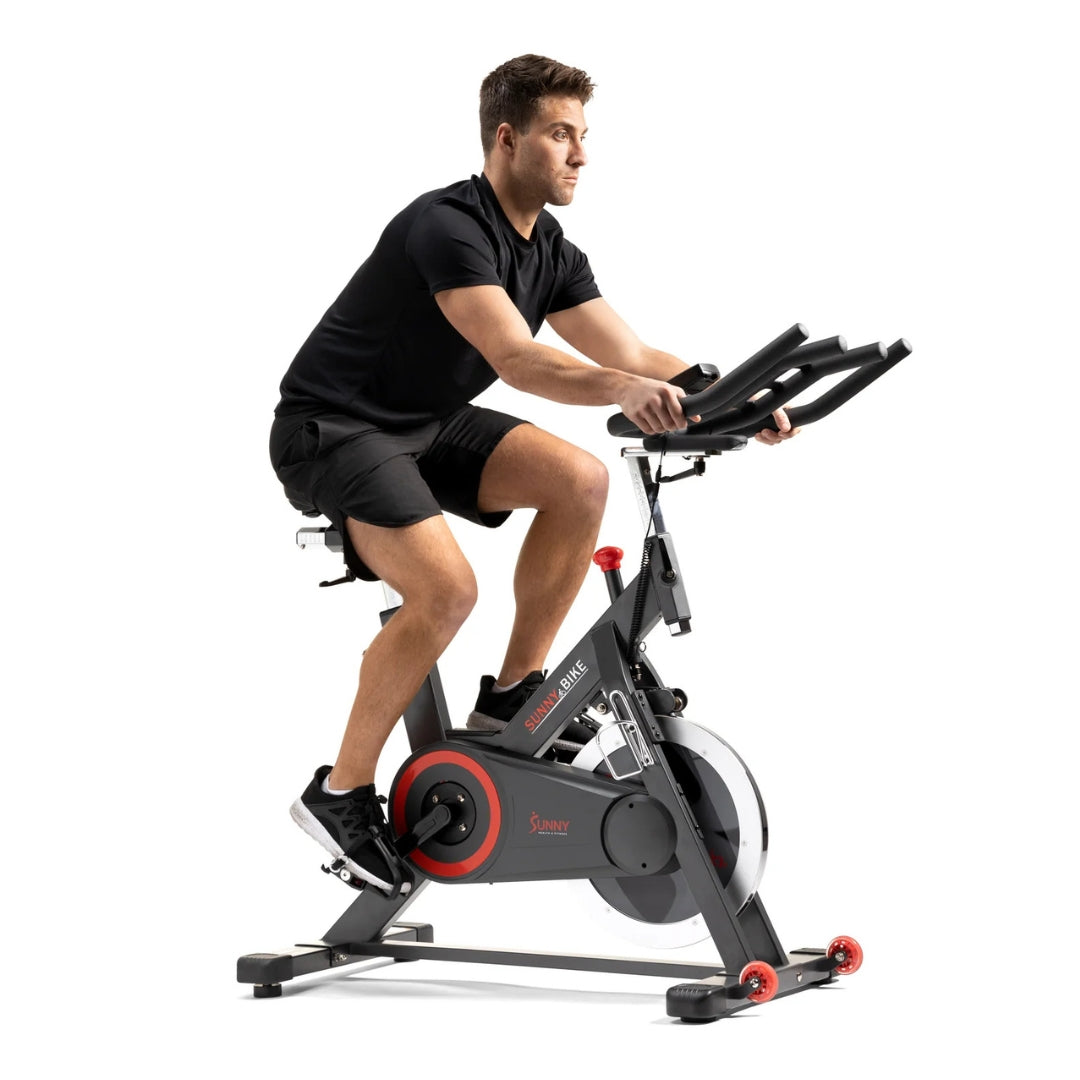
- Indoor Studio Cycle (Spin Bike): Replicates a road racing geometry with aerodynamic, forward-leaning drop bars and a perimeter-weighted flywheel designed for high-cadence and out-of-saddle efforts.
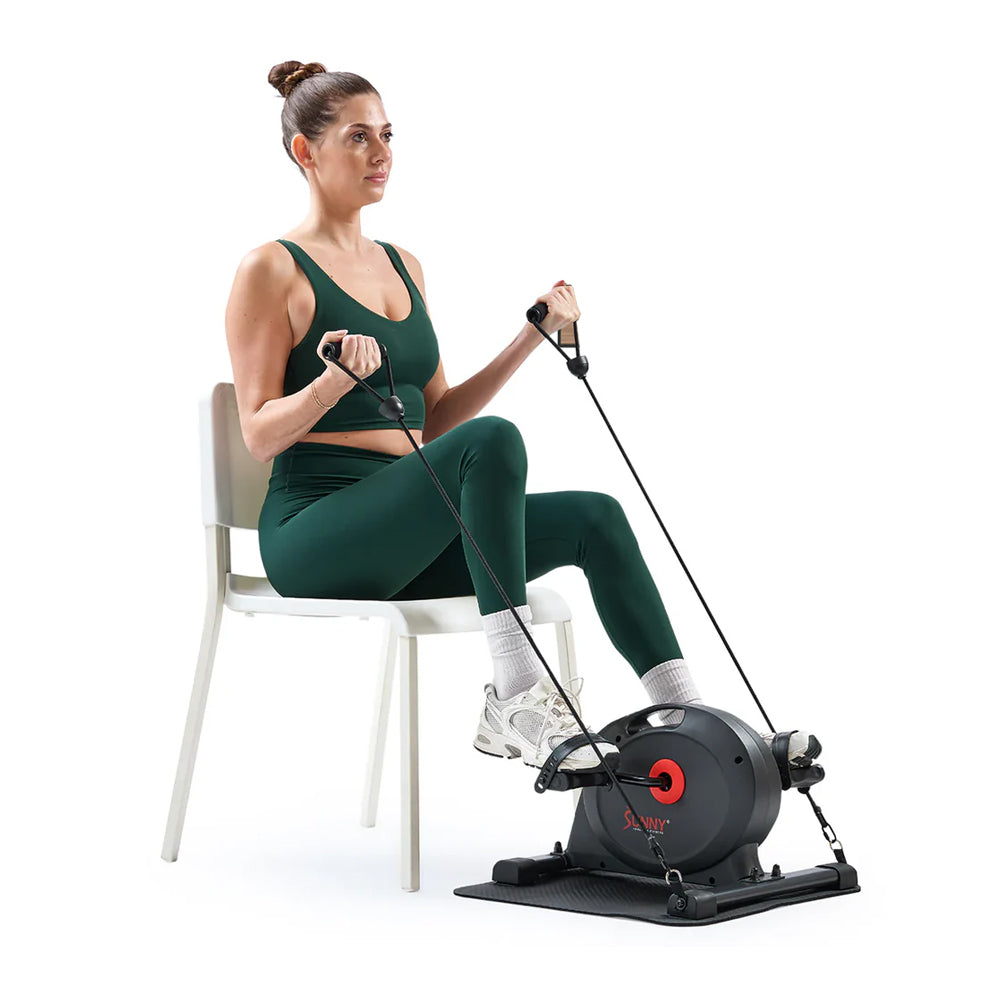
- Mini / Under-Desk Bike: A compact, frameless pedal mechanism engineered for seated leg motion during sedentary work or gentle mobility training.
 Flywheel, Drivetrain & Resistance Mechanics
Flywheel Weight & Perimeter Weighting
The metal disc providing rotational momentum. Perimeter weighting places mass on the outer edge to maximise inertia, smoothing out dead spots in the pedal rotation.
- Heavier flywheels (12kg–20kg+): Create greater inertia, resulting in a smoother, more realistic "road-like" pedal stroke.
- Lighter flywheels (4kg–10kg): Found on basic magnetic or upright bikes, offering easier initial acceleration and a smaller frame footprint.
💡 Buyer's Rule of Thumb: If you plan to perform high-intensity spin workouts or stand out of the saddle to climb, look for an indoor cycle with a flywheel mass of at least 13 kg to 15 kg.
Freewheel vs. Fixed Gear
- Freewheel: A ratcheting clutch that permits coasting (the flywheel continues spinning even if your legs stop moving).
- Fixed Gear: The pedals are permanently coupled to the flywheel; you must pedal as long as the flywheel is moving.
Resistance Mechanisms
| Resistance Type | How It Works | Key Benefits | Best For |
|---|---|---|---|
| Friction Resistance | Calliper pads (leather or felt) physically clamp against the flywheel. | Unlimited resistance gradient; highly budget-friendly. | High-intensity studio cycling on a lower budget. |
| Magnetic Resistance | Permanent opposing magnets move closer to or further from the flywheel rim. | Near-silent operation, zero friction wear, zero maintenance. | Quiet home workouts, shared flats, and low-maintenance use. |
| Electromagnetic / Eddy Current | Direct electric currents generate magnetic opposing forces instantly without mechanical moving parts. | Instant, precise resistance shifts; seamless support for automated ERG mode. | Interactive training apps (SunnyFit App) and structured power-zone workouts. |
Belt Drive vs. Chain Drive
| Drive System | Mechanism | Advantages | Drawbacks |
|---|---|---|---|
| Belt Drive | Multi-groove rubber belt linking crank to flywheel. | Virtually silent, maintenance-free (no oiling needed), ultra-smooth cadence. | Slightly higher initial purchase cost. |
| Chain Drive | Traditional bicycle link-chain and sprocket assembly. | Delivers authentic outdoor road bike tactile feedback; highly durable. | Requires regular cleaning, lubrication, and tensioning; noisier operation. |
 Biomechanics, Geometry & Fit
- Q-Factor: The horizontal distance between the outside surfaces of the crank arms. A narrower Q-factor aligns hips, knees, and ankles closely to reduce lateral joint strain and improve power transfer.
- Crank Arm Length: The length from the centre of the bottom bracket to the centre of the pedal spindle (commonly 165mm–175mm). Dictates hip closure angle at the top of the pedal stroke.
- Micro-Adjustability: Stepless sliding clamps that permit millimetre-exact saddle height, saddle fore/aft position, and handlebar reach.
- Dual-Sided / Clipless Pedals: Pedals equipped with standard toe cages on one side for running shoes and clipless latch mechanisms (such as SPD or Look Delta) on the reverse for cycling cleat integration.
 Performance Metrics, Software & Smart Features
- Cadence (RPM): Revolutions per minute of the pedal crank.
- Wattage & Power Curve: Real-time calculation of absolute kinetic power output.
- Functional Threshold Power (FTP): The theoretical maximum average wattage a rider can sustain for one full hour, used as the baseline to establish training zones 1 through 7 in fitness apps.
- ERG Mode: A smart-trainer protocol where the bike's digital resistance automatically scales based on your pedal speed to hold your power output at an exact preset wattage target.
- Physical Gradient Tilt: Incline/decline motors that raise or lower the front frame to physically match virtual hill gradients in smart apps.
 Weight & Space Specifications
- Net Weight (N.W.): The unboxed weight of the bike itself. Heavier bikes generally provide better stability during out-of-the-saddle sprints.
- Gross Weight (G.W.): Total shipping weight including protective packaging box.
- Footprint: The length and width required on your floor when fully assembled.