


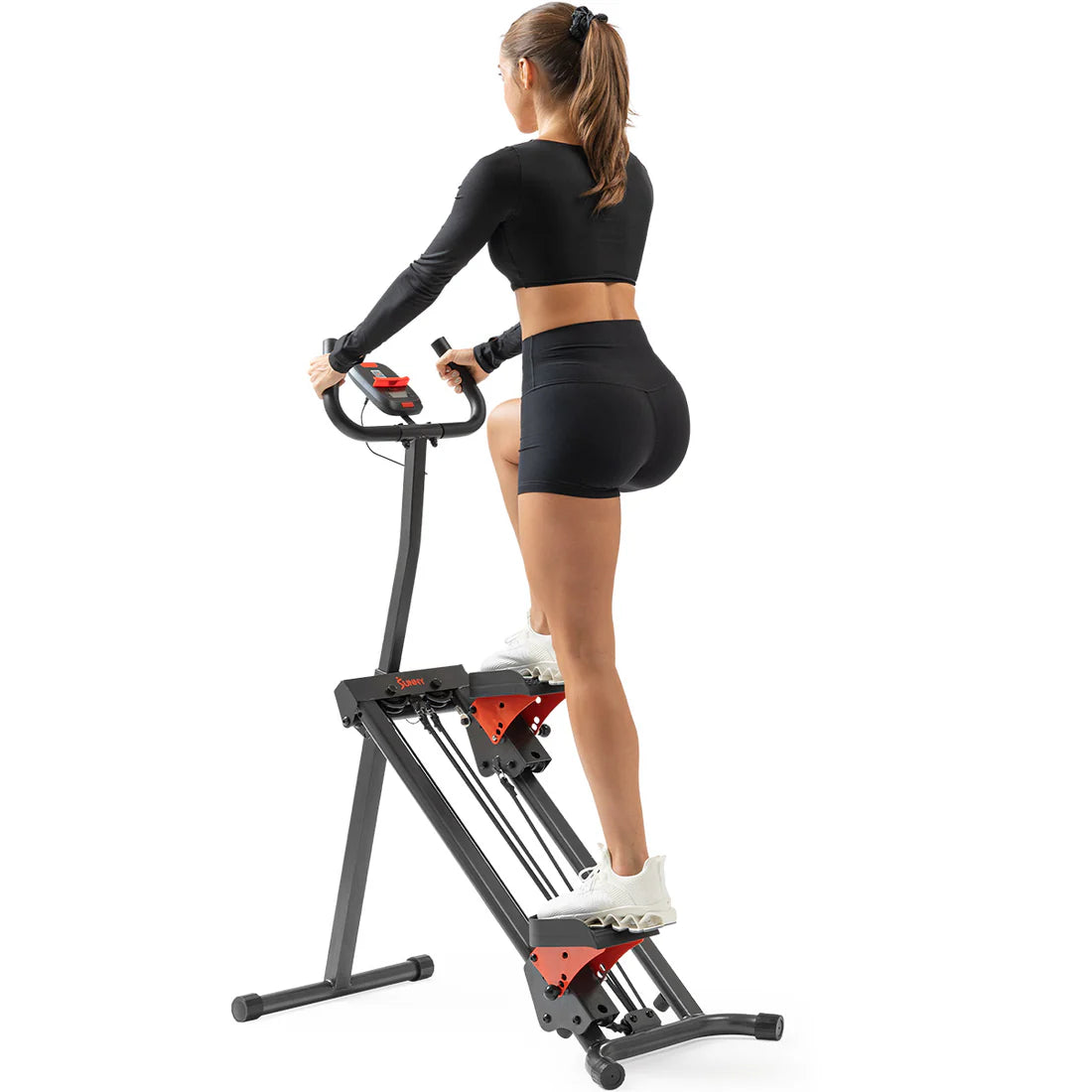
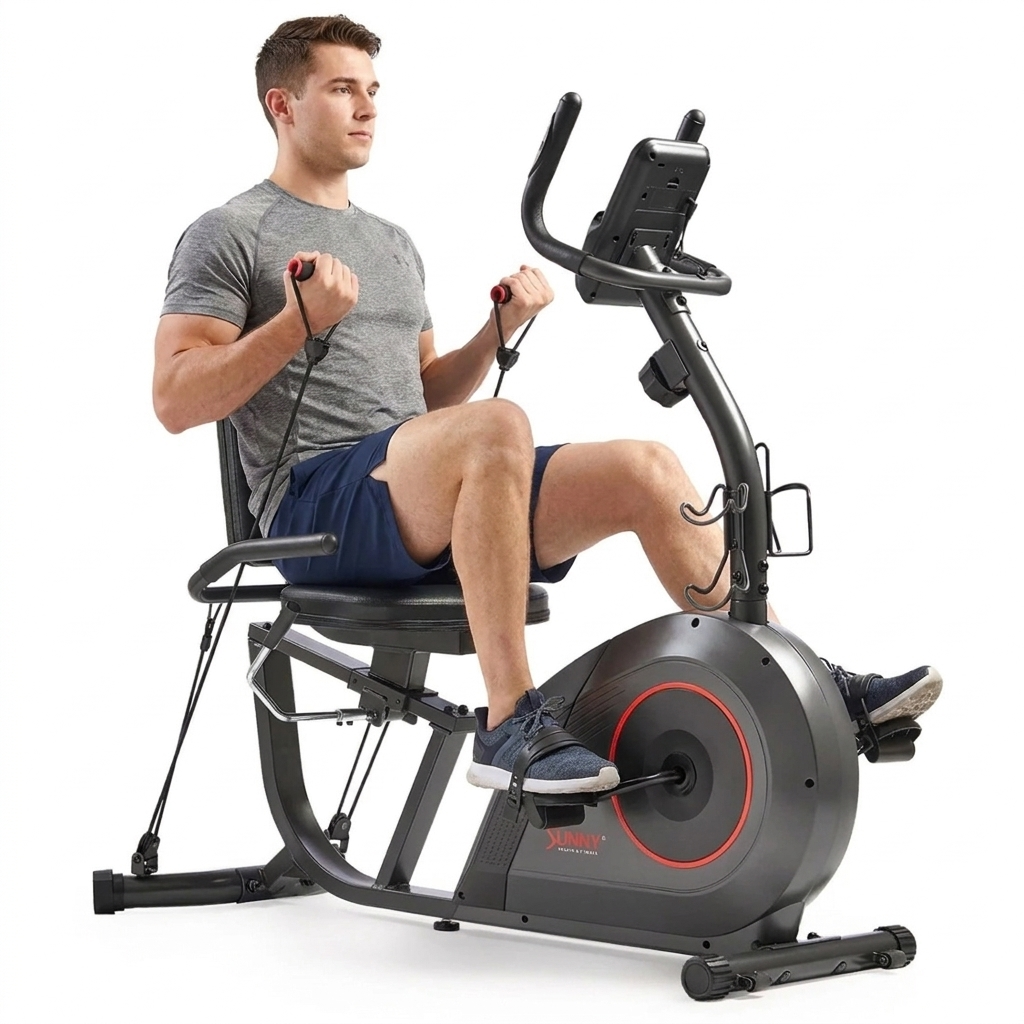
Cross Trainer Jargon
 1. Cross Trainer Types & Drive Configurations
Cross trainers are primarily defined by the positioning of their drive system and flywheel, which dictates the foot motion geometry and the machine's floor footprint.
| Drive Type | Flywheel Location | Pedal Motion Feel | Best For |
|---|---|---|---|
| Rear-Drive Cross Trainer | Behind the user. | Flatter, circular path similar to natural outdoor jogging. Fewer moving joints. | Home spaces seeking classic, balanced movement with minimal mechanical maintenance. |
| Front-Drive Cross Trainer | In front of the user. | Slightly steeper, ascending path resembling cross-country skiing or stair stepping. | Targeting glutes and hamstrings; provides easy step-on rear access for users with mobility limitations. |
| Center-Drive Cross Trainer | Flanking both sides of the foot pedals. | Very compact square footprint; keeps the user in a completely upright posture. | Smaller workout rooms that need commercial stability without long front-to-back length. |
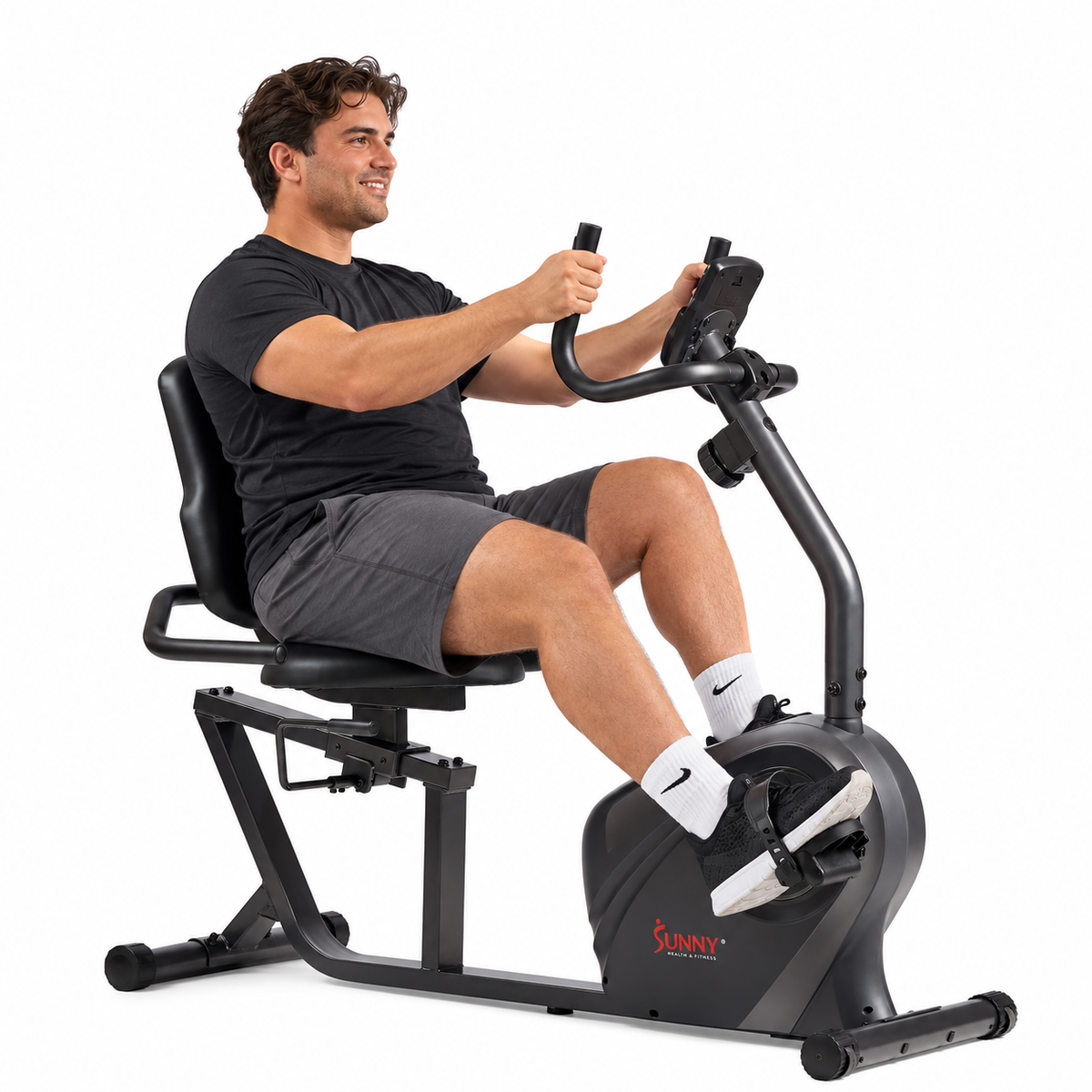
| 2-in-1 Elliptical & Exercise Bike | Rear or center housing with an integrated saddle. | Dual utility: ride seated like a stationary bike or stand to engage the moving elliptical arms. | Compact homes wanting both cycling cardio and full-body cross training in one footprint. |
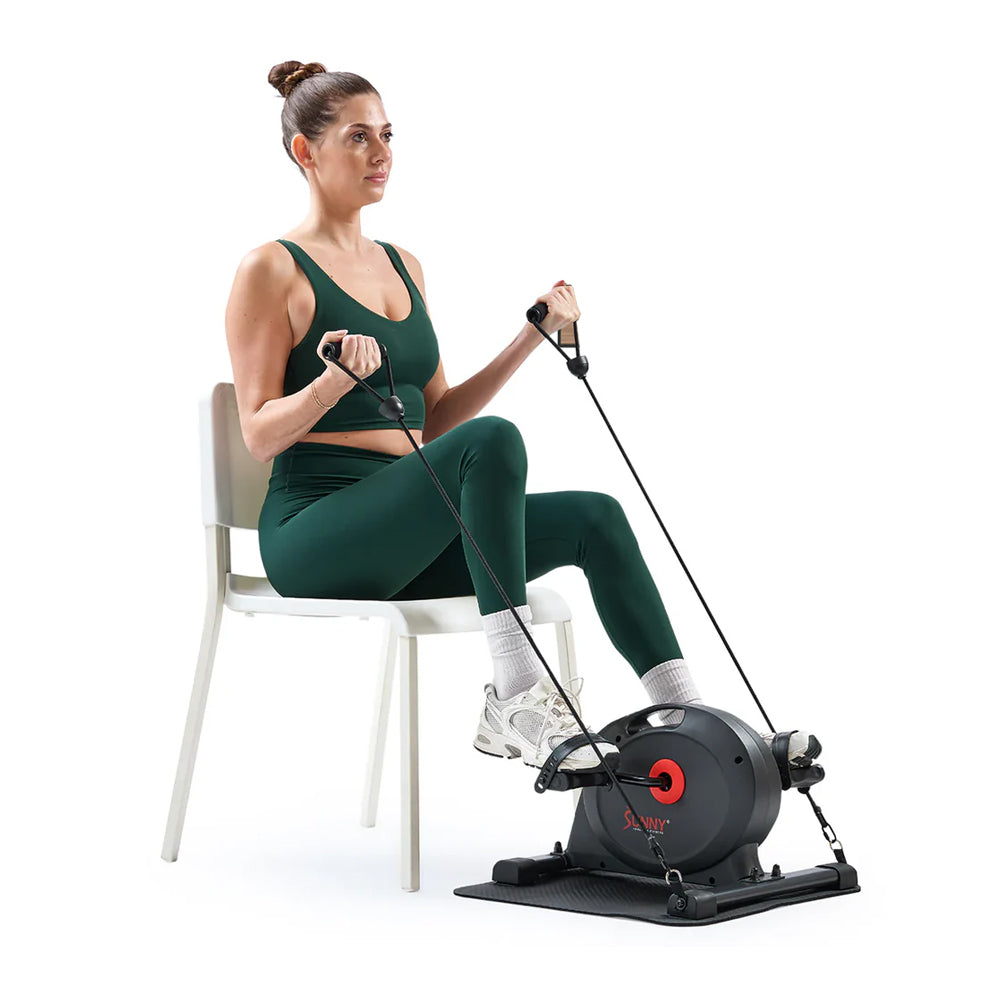
| Under-Desk / Compact Elliptical | Small, standalone foot-pedal unit without upper arms. | Low-arc, circular gliding motion while seated. | Gentle daily movement, joint rehabilitation, and desk-based circulation. |
 2. Stride Length & Biomechanics
Fixed vs. Variable Stride Length
Stride length is the maximum horizontal distance between the front and back pedals at their widest point in the rotation. Getting the correct stride length ensures your hips, knees, and ankles move naturally without feeling cramped or overextended.
- Compact / Short Stride (11"–14" / 28–36 cm): Best suited for users under 5'6" or smaller workout areas.
- Standard Home Stride (14"–17" / 36–43 cm): Ideal for average heights (5'5" to 5'11").
- Full Commercial Stride (18"–21" / 46–53 cm): Recommended for users 6'0" and taller for a full, unrestricted leg extension.
- Variable / Adjustable Stride: Advanced mechanisms that allow the user to shorten the stride for a vertical stepping motion or lengthen it for an extended running gait.
Zero-Impact Movement
Unlike treadmill running—which generates impact forces up to 2.5 times your body weight on footstrike—cross trainers keep your feet in constant contact with the pedals. This delivers an intense cardiovascular workout with virtually zero shock loading on your knees, hips, and lumbar spine.
Dual-Action Handlebars (Moving vs. Fixed)
- Moving Handlebars: Connected directly to the foot linkage. Pushing and pulling engages the chest, lats, biceps, triceps, and shoulders for full-body aerobic conditioning.
- Fixed Handlebars: Stationary central grips that allow you to rest your upper body and isolate your lower body (quads, glutes, and calves), typically housing the hand pulse sensors.
Q-Factor (Pedal Spacing)
The lateral gap between the inside edges of both pedals. A narrower Q-factor keeps your feet close to hip-width apart, ensuring correct knee alignment and preventing lateral hip strain over long endurance sessions.
Articulating Footplates
Pedal platforms designed with slight pivot angles that adapt to the natural incline of your heel and toe throughout the oval path, preventing foot numbness and Achilles tendon tension.
Two-Way / Reverse Rotation
The ability of the drivetrain to pedal both forward and backward seamlessly. Reverse pedaling immediately shifts muscular load directly onto your hamstrings and calves.
 3. Flywheels, Drivetrain & Resistance
Actual Flywheel Mass vs. Rotating Inertia
A heavier flywheel generates greater rotational momentum, eliminating jerky mechanical "dead spots" at the top and bottom of each pedal loop. Buyer's Tip: Look for the actual physical metal disc weight rather than calculated "inertia equivalence" ratings to ensure true momentum.
Resistance Mechanisms
| Resistance Type | Adjustment Mechanism | Acoustics & Maintenance | Key Features |
|---|---|---|---|
| Manual Magnetic | Turn dial connected to a mechanical tension cable. | Virtually silent; zero friction contact. | Does not require mains power; budget-friendly and easy to position anywhere in the room. |
| Motorised / Electronic Magnetic | Console buttons control an internal servomotor that positions the magnets. | Whisper-quiet; no wear or pad deterioration. | Enables automated resistance shifts during built-in interval and hill climbing programs. |
| Electromagnetic (EMS) | Console modulates electrical current directly to create opposing magnetic flux. | Completely silent; instantaneous response. | Commercial-grade precision; instantly supports app-controlled power output (watts) and ERG mode. |
| Self-Generating (Generator Drive) | Pedaling spins an internal alternator that powers the console and electromagnets. | Zero cords, completely self-powered. | Eco-friendly and cordless; perfect for garage gyms or outdoor garden rooms without wall sockets. |
Belt Drive System
A multi-groove reinforced rubber belt transfers your stepping force from the crank to the flywheel. Belt systems run almost silently and never require lubrication or chain tension adjustments.
 4. Structural Integrity, Rails & Bearings
- Dual Rails vs. Single Rail Tracks: On front-drive machines, the pedal arms glide along floor tracks. Dual-rail configurations place two rollers on parallel tracks, preventing lateral sway, wheel derailment, and squeaking during vigorous workouts.
- Sealed Bearings vs. Bushings: Quality cross trainers feature sealed steel cartridge bearings at all main pivot joints. These resist dust and sweat, eliminate squeaks, and offer significantly longer operating lifespans compared to cheap nylon or brass bushings.
- 1-Piece vs. 3-Piece Crank: A 3-piece crank separates the left and right pedal arms onto an independent central steel spindle (identical to premium road bicycles). This provides superior rigidity and allows easy component replacement compared to standard 1-piece bent-rod cranks.
 5. Incline, Console & Connectivity
Incline Ramp (Manual vs. Power Incline)
Adjusting the gradient alters the elliptical arc:
- Flat / Low Gradient: Replicates cross-country skiing, balancing load evenly across the quadriceps and thighs.
- Elevated Incline: Mimics steep hiking or stadium stair climbs, significantly increasing glute and hamstring recruitment while elevating caloric burn.
Console Performance Metrics & Connectivity
- Cadence (RPM / SPM): Revolutions Per Minute or Strides Per Minute, tracking the frequency of your strides.
- Wattage: Real-time mechanical power output generated during the stride.
- Pulse Sensors & Telemetric Receivers: In addition to metallic hand pulse plates, premium consoles feature 5.3 kHz or Bluetooth telemetric receivers that pair directly with wireless chest straps for ECG-accurate heart rate monitoring.
- FTMS Bluetooth Protocol: Fitness Machine Service wireless standard that allows your cross trainer to broadcast speed, cadence, and power directly to third-party interactive training apps (such as Kinomap and Zwift), allowing the app to automatically control the resistance.
 6. Weight, Stability & Space Specifications
- Maximum User Weight: The engineered load capacity of the steel frame and pedal linkage. Choosing a machine with a buffer of at least 15–20 kg above your body weight provides greater stability during high-speed sessions.
- Net Weight (N.W.) vs. Gross Weight (G.W.): Net weight measures the assembled cross trainer alone. A heavier frame lowers the center of gravity, preventing rocking when pedaling vigorously out of the saddle. Gross weight is the total packaged shipping weight.
- Ceiling Clearance & Step-Up Height: Cross trainers elevate your feet significantly higher than treadmills. Calculate your required room height using this formula: User Height + Maximum Pedal Step-Up Height (typically 30–40 cm) + 15 cm overhead safety clearance.
- Adjustable Leveling Stabilizers: Threaded rubber feet located on the rear and front bottom stabilizers that screw in and out to ensure the machine remains flat on uneven floor surfaces.