

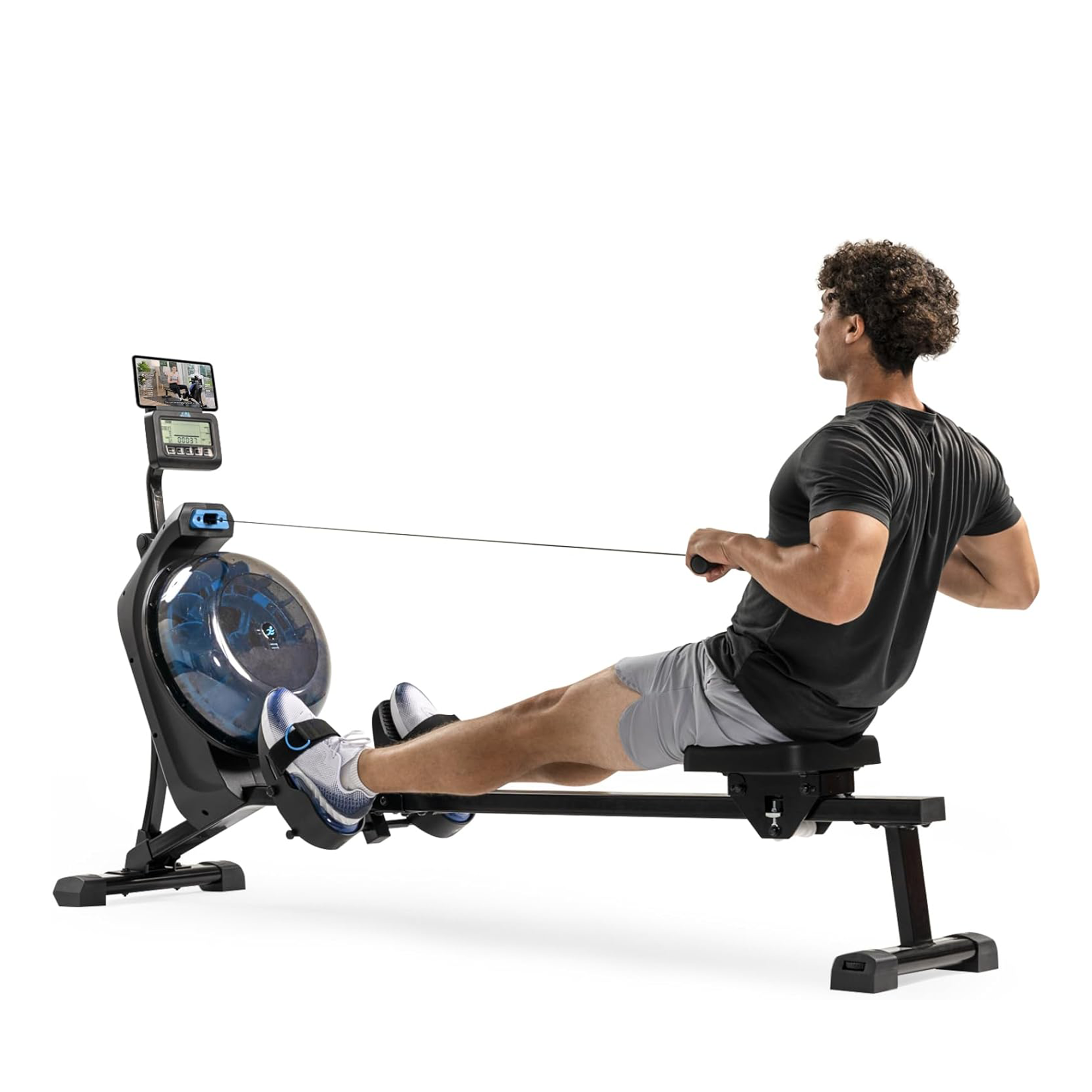

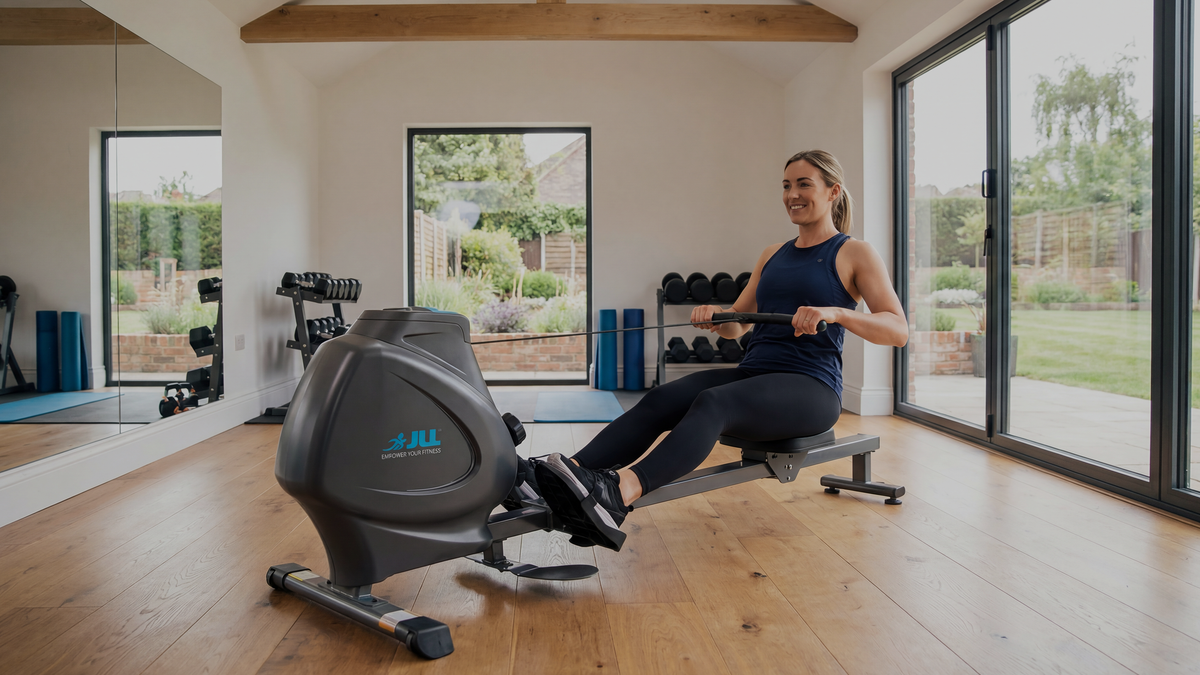
If you're searching for a single piece of equipment that delivers a full-body workout, burns serious calories, and protects your joints, a rowing machine might be exactly what you need. While treadmills and exercise bikes dominate many home gyms, rowing machines offer unique advantages that make them one of the most effective cardio machines available.
What Makes Rowing Machines So Effective?
Rowing machines simulate the natural motion of rowing a boat, engaging up to 86% of your muscles in every stroke. Unlike many cardio machines that focus primarily on your lower body, rowing distributes the workload across your legs, core, back, arms, and shoulders. This makes it an incredibly efficient choice for anyone looking to maximise their workout time.
The Top Benefits of Using a Rowing Machine
1. Complete Full-Body Workout
Each rowing stroke engages nine major muscle groups simultaneously. Your legs initiate the drive phase (providing about 60% of the power), your core stabilises and transfers energy (20%), while your upper body completes the stroke (20%). This coordinated effort means you're building strength and endurance throughout your entire body rather than isolating specific areas.
The major muscles worked include your quadriceps, hamstrings, glutes, calves, abdominals, obliques, lower back, latissimus dorsi, rhomboids, trapezius, deltoids, biceps, and forearms. Few other cardio machines can claim such comprehensive muscle engagement.
2. Exceptional Calorie Burn
Rowing machines are calorie-burning powerhouses. A person weighing 83kg can burn approximately 255 calories in just 30 minutes of moderate-intensity rowing. Increase the intensity to vigorous rowing, and that number jumps significantly higher, potentially exceeding 400 calories in the same timeframe.
Because rowing recruits so many muscle groups, your body requires substantial energy to fuel the movement. This elevated energy demand translates directly into higher calorie expenditure compared to many other forms of cardio exercise.
3. Low-Impact on Your Joints
One of rowing's greatest advantages is its low-impact nature. Unlike running, which subjects your knees and ankles to forces equivalent to several times your body weight with each footstrike, rowing keeps your feet stationary throughout the movement. The smooth, gliding motion eliminates jarring impacts while still delivering cardiovascular benefits.
This makes rowing machines ideal for people recovering from injuries, those with arthritis or joint concerns, older adults, and anyone seeking an intense workout without the wear and tear on their joints. You can push yourself hard without the repetitive stress that often leads to overuse injuries.
4. Cardiovascular Health Improvements
Regular rowing workouts strengthen your heart and improve circulation. As an aerobic exercise, rowing increases your heart rate and breathing, training your cardiovascular system to work more efficiently. Studies have shown that consistent rowing can help lower blood pressure, reduce bad cholesterol levels, and decrease your risk of heart disease.
The beauty of rowing is that you can easily adjust the intensity to match your fitness level. Whether you're doing steady-state cardio or high-intensity interval training, your heart benefits from the sustained effort.
5. Builds Strength and Power
While many people think of rowing as purely cardio, it's also an excellent strength-building exercise. The resistance provided by the rowing machine creates tension that your muscles must overcome with each stroke. Over time, this builds muscular endurance and power, particularly in your legs, back, and core.
Most modern rowing machines allow you to adjust the resistance level, letting you increase the challenge as you grow stronger. This progressive overload helps you continue building strength rather than plateauing after initial gains.
6. Enhances Core Stability
Your core works constantly during rowing to maintain proper posture and transfer power from your legs to your upper body. Every stroke requires your abdominals and lower back muscles to stabilize your torso during the drive and recovery phases.
This continuous core engagement translates to improved posture, better balance in daily activities, and reduced risk of lower back pain. Unlike isolated core exercises, rowing builds functional strength through natural, coordinated movements.
7. Suitable for All Fitness Levels
Whether you're a complete beginner or an experienced athlete, rowing machines accommodate your current fitness level. Beginners can start with low resistance and shorter sessions, focusing on proper technique before gradually increasing intensity. Advanced users can incorporate sprint intervals, increase resistance, and extend workout duration for challenging sessions.
The rowing motion itself is relatively easy to learn compared to complex gym equipment, though proper form is essential for maximising benefits and preventing injury. Most people can grasp the basic technique within a few sessions.
8. Time-Efficient Workouts
When your time is limited, rowing delivers maximum results in minimum time. Because you're working your entire body simultaneously, a 20-minute rowing session can provide benefits equivalent to much longer workouts on single-muscle-group machines.
High-intensity interval training on a rowing machine is particularly time-efficient. Alternating between hard rowing efforts and active recovery can torch calories and improve fitness in sessions lasting just 15 to 30 minutes.
9. Mental Health Benefits
Like most forms of exercise, rowing provides significant mental health benefits. The rhythmic, repetitive nature of rowing can be meditative, helping reduce stress and anxiety. The endorphin release during and after rowing improves mood and can help combat depression.
Additionally, achieving rowing goals, whether that's distance, time, or pace targets, builds confidence and provides a sense of accomplishment that extends beyond the gym.
10. Space-Efficient Home Fitness Solution
Many quality rowing machines fold for storage, making them practical for home gyms with limited space. When not in use, they can be stored vertically or tucked away, freeing up valuable floor space. This convenience removes common barriers to consistent exercise.
Compared to multi-piece home gym setups, a single rowing machine provides comprehensive fitness benefits while requiring minimal square footage.
11. Improves Posture and Reduces Back Pain
Rowing strengthens the posterior chain muscles that support good posture, including your back, glutes, and hamstrings. These muscles often become weak and tight from prolonged sitting, contributing to poor posture and back pain.
When performed with proper technique, rowing helps reverse these effects by strengthening weak muscles and improving spinal alignment. Many people find that regular rowing reduces chronic back pain and helps them maintain better posture throughout the day.

Types of Rowing Machines
Understanding the different types of rowing machines helps you choose the right one for your needs:
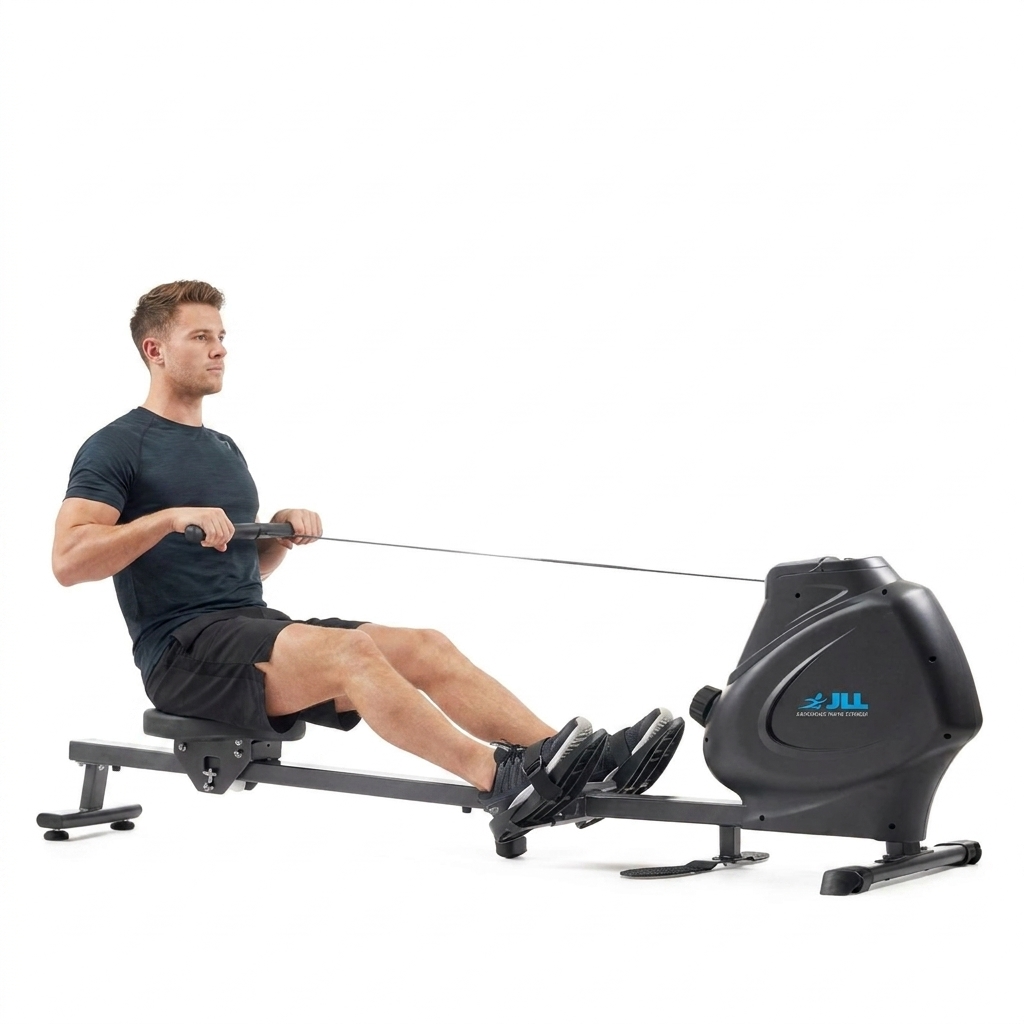
Air Resistance Rowers: These use a flywheel and fan to create resistance that increases as you row harder. They provide a smooth, natural feel and are popular in commercial gyms. The resistance is unlimited since it's self-generated.
Magnetic Resistance Rowers: These use magnets to create adjustable resistance levels. They operate very quietly and require minimal maintenance, making them excellent for home use.
Water Resistance Rowers: These contain water in a tank and use paddles to create resistance. They closely simulate the feel of rowing on water and produce a soothing water sound. Resistance increases with rowing intensity.
Hydraulic Resistance Rowers: These compact, budget-friendly options use hydraulic pistons for resistance. While they take up less space, they don't provide the same smooth rowing motion as other types.
Getting Started: Proper Rowing Technique
To maximise benefits and prevent injury, proper technique is essential. The rowing stroke consists of four phases:
The Catch: Begin with knees bent, shins vertical, arms extended forward, and back straight with a slight forward lean. Your shoulders should be relaxed.
The Drive: Push through your legs first, keeping your arms straight. As your legs extend, lean your torso back slightly, then pull the handle to your lower ribs with your elbows moving past your body.
The Finish: At the end of the stroke, your legs are extended, you're leaning back about 10-15 degrees, and the handle is pulled to your lower chest with shoulders down.
The Recovery: Extend your arms forward, hinge forward at the hips, then bend your knees to slide forward, returning to the catch position.
The ratio should be roughly 1:2 for drive to recovery, meaning the powerful drive phase is quicker than the relaxed recovery phase.
Common Rowing Mistakes to Avoid
Many beginners make preventable mistakes that reduce effectiveness and increase injury risk. Avoid pulling with your arms first, as this robs you of the powerful leg drive that should initiate each stroke. Keep your back straight throughout the movement rather than hunching forward, which stresses your lower back unnecessarily.
Don't grip the handle too tightly; maintain a relaxed grip to prevent forearm fatigue. Avoid jerky, rushed movements and instead focus on smooth, controlled strokes with proper sequencing. Finally, don't rush the recovery phase. This should be relaxed and controlled, giving you time to prepare for the next powerful drive.
Sample Rowing Workouts
Beginner Steady-State Workout: Row for 15-20 minutes at a comfortable, conversational pace. Focus on maintaining proper form throughout. Aim for 20-24 strokes per minute. Perform this 3-4 times per week.
Intermediate Interval Training: Warm up for 5 minutes at an easy pace. Then complete 8 rounds of 90 seconds hard rowing followed by 90 seconds easy rowing. Cool down for 5 minutes. This workout improves both aerobic and anaerobic fitness.
Advanced Pyramid Workout: After a 5-minute warm-up, row hard for 1 minute, rest 1 minute, then 2 minutes hard, 2 minutes rest, then 3 minutes hard, 3 minutes rest. Reverse the pyramid (3-2-1) with the same rest intervals. Finish with a 5-minute cool-down.
How to Choose the Right Rowing Machine
When selecting a rowing machine, consider your available space, budget, and noise tolerance. Measure your workout area and ensure you have adequate room, remembering that you'll need additional space around the machine. Consider ceiling height if you're tall.
Evaluate the resistance type based on your preferences. Air rowers provide unlimited resistance but can be noisy. Magnetic rowers are quiet and smooth, ideal for apartments. Water rowers offer authentic feel and pleasant sounds but require occasional maintenance.
Check the maximum user weight capacity to ensure the machine suits your needs. Look for a comfortable seat, smooth gliding mechanism, and clear monitor displaying relevant metrics like time, distance, strokes per minute, and calories burned.
Incorporating Rowing Into Your Fitness Routine
Rowing can serve as your primary cardio workout or complement other training. For general fitness, aim for 3-5 rowing sessions per week, varying intensity and duration. Combine rowing with strength training on alternate days for comprehensive fitness development.
If you're training for a specific sport or goal, use rowing as cross-training to build aerobic capacity without the impact of your primary activity. Runners, cyclists, and swimmers often incorporate rowing to maintain fitness during recovery periods or when weather prevents outdoor training.
Listen to your body and allow adequate recovery between intense sessions. While rowing is low-impact, it still places demands on your muscles and cardiovascular system that require rest to adapt and improve.
Conclusion: Why Rowing Machines Deserve a Place in Your Fitness Routine
Rowing machines offer an exceptional combination of full-body conditioning, calorie burning, and joint-friendly exercise that few other machines can match. Whether your goal is weight loss, improved cardiovascular health, increased strength, or simply a time-efficient workout, rowing delivers comprehensive benefits.
The versatility of rowing machines makes them suitable for virtually everyone, from beginners taking their first steps toward fitness to athletes maintaining peak conditioning. As you develop your rowing technique and gradually increase intensity, you'll discover why rowing has been a cornerstone of fitness training for decades.
At JLL Fitness, we understand that choosing the right rowing machine can transform your home workout experience. Explore our range of quality rowing machines designed to help you achieve your fitness goals with comfort, durability, and performance.
Ready to experience the benefits of rowing for yourself? Your journey to improved fitness, strength, and health starts with a single stroke.




Leave a comment
All comments are moderated before being published.
This site is protected by hCaptcha and the hCaptcha Privacy Policy and Terms of Service apply.