



In a world filled with high-tech gym gadgets and expensive monthly memberships, there is a powerful movement returning to the basics. It’s called calisthenics.
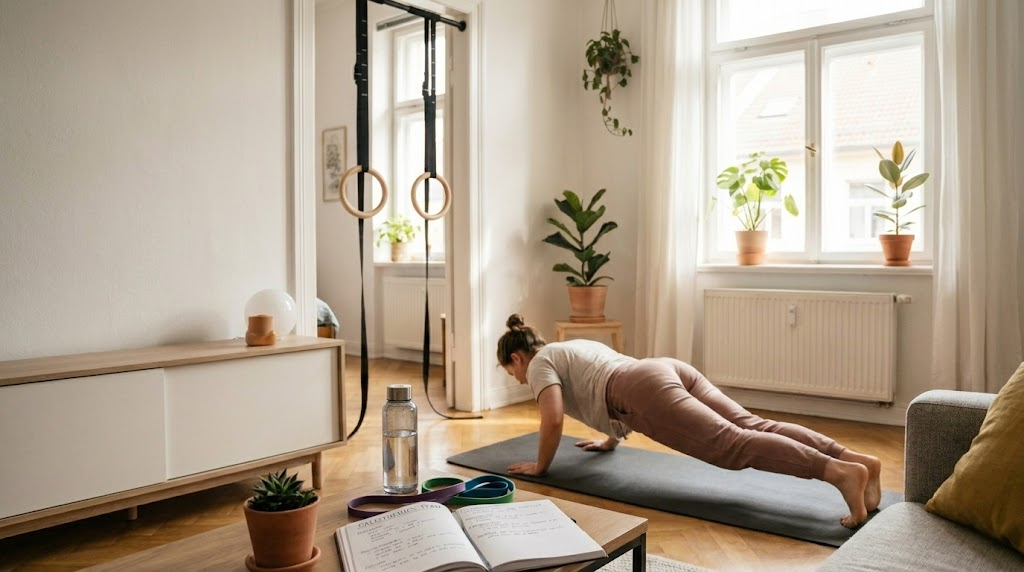
Derived from the Greek words kallos (beauty) and sthenos (strength), calisthenics is more than just a workout; it is the art of mastering your own body weight. At JLL Fitness, we believe that premium health shouldn't be gated behind a gym turnstile. Whether you have a dedicated home gym or a small corner of your living room, you can build an elite physique using nothing but gravity and a few key pieces of equipment.
This guide will walk you through everything you need to know about how to start calisthenics at home, from the fundamental movements to the essential gear that will fast-track your progress.
1. What is Calisthenics?
Calisthenics is a form of strength training that uses your body weight as resistance. Unlike traditional bodybuilding, which often isolates muscles using machines or free weights, calisthenics relies on compound movements. This means you are training major muscle groups simultaneously, leading to better functional strength, coordination, and "real-world" athleticism.
Regardless of your current fitness level, these types of exercises are designed to be scalable. Whether you are looking for a no equipment workout to do in a hotel room or a fully geared-out home session, calisthenics adapts to your fitness goals.
Why Start at Home?
Zero Barriers: No commute, no waiting for machines, and no membership fees.
Privacy: Master difficult or "awkward" progressions (like your first crow pose or assisted pull-up) without the eyes of a crowded gym on you.
Efficiency: You can fit a high-intensity circuit into a 30-minute window between meetings or chores.
2. The Essential Calisthenics Beginner Toolkit
While you can start with nothing, your progress will eventually plateau without vertical pulling and pushing surfaces. To truly unlock a professional workout routine, we recommend a few home essentials:

Yoga & Fitness Mats
Calisthenics involves a lot of floor work—planks, mountain climbers, and stretching. A high-quality non-slip fitness mat protects your joints from hard floors, reducing the risk of discomfort during high-repetition sets.
Pull-Up Bars
Pulling is the hardest movement to replicate with just furniture. If you are browsing for home gym equipment suppliers, a sturdy bar is the cornerstone of any bodyweight setup.

Resistance Bands
For beginners, the "body weight" of a full pull-up can be too much. Resistance bands act as a partner, "lifting" some of your weight so you can master the form before you have the full strength. They are also excellent for warming up the shoulder blades and rotator cuffs.
Parallettes & Weight Vests
Once you’ve mastered the basics, parallettes allow for a deeper range of motion on push-ups and dips, while a weighted vest adds progressive overload—the key to building muscle with calisthenics.
3. The 5 Foundations of Calisthenics
To build a balanced body, your home routine must include these five movement patterns. Mastering these calisthenics exercises is vital before moving on to advanced skills like muscle-ups or handstands.

1: The Push (Chest, Shoulders, Triceps)
The Form: Keep your core engaged and your body in a straight line.
Progressions: Start with incline push-ups (hands on a sofa) and move toward standard floor push-ups as you get stronger.

2: The Pull (Back, Biceps, Forearms)
The Form: Pull your shoulder blades down and back before you initiate the lift.
Equipment: This is where pull up bars become essential. Beginners can start with "negatives"—jumping to the top and lowering slowly.

3: The Squat (Quads, Glutes, Hamstrings)
The Form: Stand with feet shoulder width apart. Drive through your heels and keep your chest up.
Variety: Standard bodyweight squats are the foundation, but you can progress to single leg variations (pistol squats) to increase the intensity.
4: The Lunge (Legs, Balance, Mobility)
The Form: Step forward and lower your hips until both knees are bent at a 90-degree angle.
Benefit: Lunges are one of the best bodyweight exercises for beginners to improve balance and hip mobility.
5: The Core (Abs, Obliques, Lower Back)
The Form: Whether in a plank or a leg raise, keeping the core engaged protects the spine and increases total-body tension.
4. Your Beginner Calisthenics Workout Plan
Consistency is more important than intensity when you're starting. Aim to perform this routine three times a week with at least one rest day in between.
The Full-Body Circuit
Perform these exercises back-to-back. Rest for 90 seconds after completing one full circuit. Repeat 3–4 times.
- Incline Push-ups: 10–12 Reps (Focus on a slow descent).
- Bodyweight Squats: 15 Reps (Keep your feet shoulder width apart).
- Resistance Band Rows: 12 Reps (Squeeze the shoulder blades at the peak).
- Reverse Lunges: 10 Reps per leg (Maintain a proud chest).
- Plank: 30–45 Seconds (Keep the core engaged).
Exercise |
Reps |
Focus Tip |
|
Incline Push-ups |
10–12 Reps |
Keep your elbows at 45°, don't flare them |
|
Air Squats |
15 Reps |
Drive through your heels, keep chest up |
|
Resistance Band Rows |
12 Reps |
Squeeze your shoulder blades together |
|
Reverse Lunges |
10 Reps (Per leg) |
Keep your front knee over your ankle |
|
Plank |
30–45 Seconds |
Squeeze your glutes to protect your lower back |
5. The Calisthenics Progression Guide
In a gym, you just grab a heavier weight. In calisthenics, you use "Mechanical Advantage." You make the exercise harder by changing your body's leverage or reducing the points of contact.
Tempo Training: Try taking 4 seconds to lower yourself. This increases "Time Under Tension," which is vital for hypertrophy.
Unilateral Movement: Moving from two-arm exercises to single leg or single-arm variations drastically increases the load on the working muscle.
Decrease Leverage: The further your feet are from your hands in a plank or push-up, the harder your muscles have to work to stabilise.
6. Reducing the Risk of Injury
One common misconception is that bodyweight training is "easy." However, the risk of injury is still present if form is neglected.
Warm Up: Never skip a 5-10 minute dynamic warm-up to prepare your joints.
Listen to Your Body: Unlike a personal trainer who might push you through pain, you must be your own coach at home. If a joint feels sharp pain, stop and regress the movement.
Quality Over Quantity: 5 perfect reps are always better than 20 sloppy ones.

7. Why Quality Gym Equipment Matters
Even though you are using your body weight, the gym equipment you use for support must be industrial grade. Lower-quality bars can slip or flex, which increases the risk of injury. At JLL Fitness, our home gym equipment UK range is tested to ensure stability, so you can focus entirely on your reps.
Conclusion
The beauty of calisthenics is that it meets you exactly where you are. You don't need to be fit to start; you start to get fit. With a small space at home, a bit of discipline, and a solid calisthenics progression guide, you can transform your body in ways you never thought possible.
Ready to build your home calisthenics gym? Explore our Strength Training Collection and take the first step today. Your body is the only gym you truly need—let's start training like it.




Leave a comment
All comments are moderated before being published.
This site is protected by hCaptcha and the hCaptcha Privacy Policy and Terms of Service apply.