

Treadmill Jargon
 Machine Types
 Treadmill Types & Categories
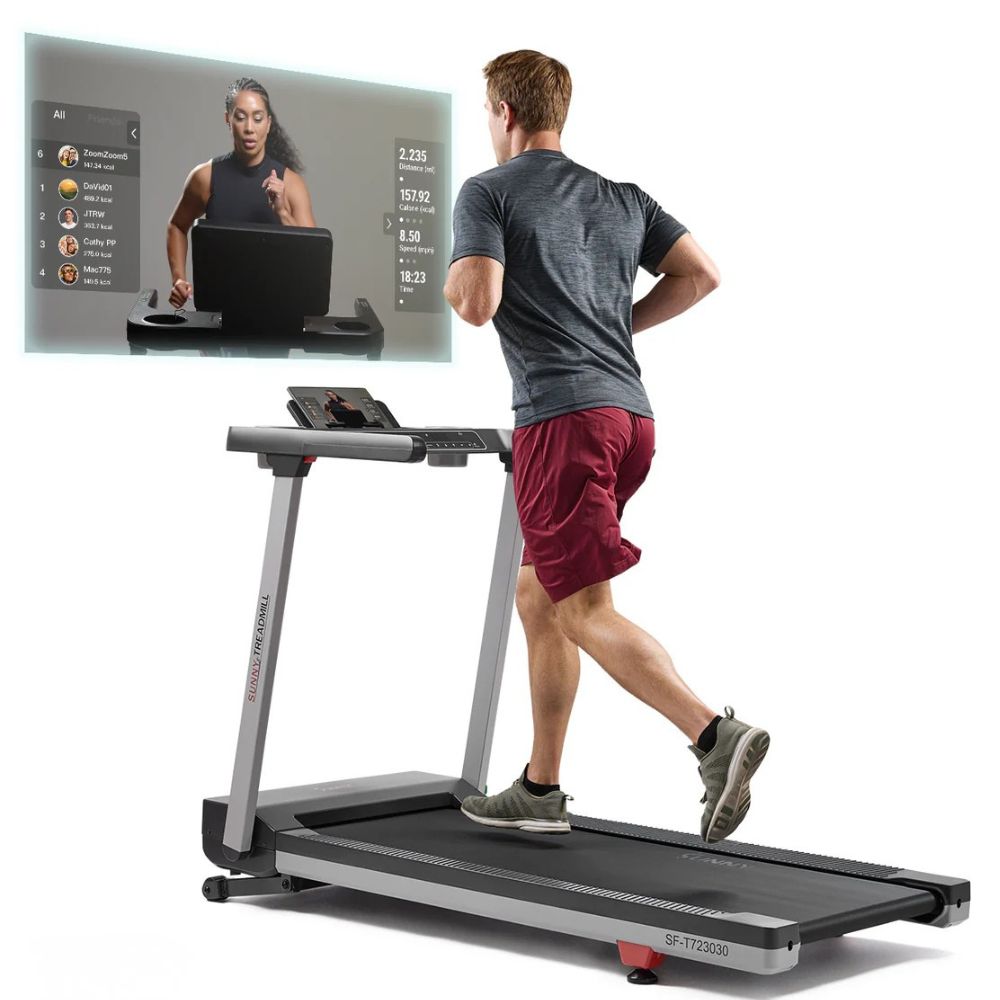
Home Treadmill
We include in this category every treadmill that is suitable for home use. It is the perfect machine for those with limited space because you can fold it up and store it while it is not in use. All JLL folding treadmills are built on wheels for easy transport.
Folding treadmills are one of the most popular pieces of fitness equipment for those who want to exercise in the comfort of their own home at any time. It can also be used by every family member.
Incline Trainer
Incline trainers mimic walking or running up hills, making your workout more challenging, burning more calories, and further increasing muscle tone. You can burn significantly more calories in less time simply by adjusting to a steeper incline level.
Motorised (UK)
Another term for an automatic treadmill that uses an internal motor to operate the belt, providing smooth speed control and preset workout programmess for your home workouts.
 Motor & Electronics Specifications
Continuous Horsepower (CHP) vs. Peak Horsepower (PHP)
Continuous Horsepower (CHP) tells you how the motor operates continually without dropping off, reflecting the true efficiency and durability of the machine. Peak Horsepower (PHP) is the fastest or strongest the motor can work for short bursts.
AC vs. DC Motors
| Motor Type | How It Works & Features | JLL Range Usage |
|---|---|---|
|
DC Motor (Direct Current) |
Converts electrical energy efficiently. Delivers smooth, quiet performance with a low start speed of 0.3 km/h (lowest on the UK market). | Standard & Compact Home Treadmills |
|
AC Motor (Alternating Current) |
Powered by alternating current, controlled via frequency drive. Offers high torque, heavy-duty durability, and continuous power for extended training sessions. | Heavy-Duty & High-Performance Home Models |
Digital Controller Technology
A digital control system manages motor speed transitions, allowing the belt to accelerate or decelerate slowly and smoothly. This drastically improves user safety and increases the overall lifespan of the motor drive system.
 Running Deck, Belt & Cushioning
Cushioning System
Located between the running belt and the steel frame, the cushioning layer redirects footstrike impact away from your joints (knees, ankles, and lower back).
Running Belt Dimensions
The black ribbon track where you run. Standard belt sizes around 40 cm (W) x 120 cm (L) are great for walking. If you plan to jog or run, opt for a wider and longer belt to accommodate natural side-to-side body sway and longer strides.
 Incline & Console Controls
Manual vs. Automatic Incline
| Incline Type | How It Works | Incline Range |
|---|---|---|
| Manual Incline | Requires stopping the machine and manually adjusting the rear notches before starting your run. More budget-friendly. | Fixed notch levels |
| Automatic Incline | Uses an internal motor to adjust the gradient seamlessly mid-stride at the touch of a button. | 0 to 12% Incline |
Quick Incline & Speed Buttons
Console shortcut buttons that let you jump directly to target inclines (e.g., 3%, 6%, 10%) or speeds with a single touch, rather than pressing arrow keys repeatedly.
Console Features
The central hub displaying workout metrics (time, speed, distance, calories, heart rate). Quality consoles feature easy-to-read buttons, quick adjustment toggles, phone/tablet stands, and built-in music controls or Bluetooth speakers.
 Weight & Space Specifications
Gross Weight (G.W.) vs. Net Weight (N.W.)
Net Weight (N.W.): The exact weight of the treadmill machine itself.
Gross Weight (G.W.): The total packaged weight, including the treadmill, box, and protective packaging materials (important for delivery considerations).
Occupying Area (Footprint)
The total floor area required when the treadmill is fully unfolded and ready for use. This includes the running deck, side rails, console height, and rear frame clearance.